Leonids Meteor Shower November 2026: Peak Night, Best Time and How to Watch
- Primary Signal: Leonids Meteor Shower November 2026: Peak Night, Best Time and How to Watch
- Overview: The Leonids peak on the night of November 17-18, 2026, with up to 15 meteors per hour under dark skies. Here is when to look, where to look, and how to see the most meteors....
- Verification: Analyzed and compiled by FreeSky Cosmos editorial monitoring desk.
November is meteor season, and the Leonids are its fastest show. Every year in mid-November, Earth ploughs through a stream of dust left behind by comet 55P/Tempel-Tuttle, and the dust burns up in our atmosphere as swift, bright meteors, many of them leaving glowing trains that linger for a second or two. In 2026 the timing is kind: the peak falls on the night of November 17-18, the Moon sets around midnight, and the best hours before dawn should be properly dark. You need no telescope, no ticket and no special skill, just a dark spot, warm clothes and a little patience.
When Is the Leonid Meteor Shower in 2026?
The Leonids are active from November 6 to November 30, 2026, but the peak is the night of Tuesday, November 17 into the early morning of Wednesday, November 18. The American Meteor Society lists the peak night as November 16-17, while EarthSky puts the predicted maximum at around midnight UTC on November 18, so the nights of November 16-17 and 17-18 are both worth your time. The first-quarter Moon arrives on the morning of November 17 and sets around midnight, which means the prime after-midnight window is moon-free. Expect about 10 to 15 meteors per hour under a dark sky. This is not a storm year, and nobody should promise hundreds, but the Leonids are famous for bright meteors and occasional fireballs, so even a modest count feels spectacular.
What Makes the Leonids Special
Leonid meteors are among the fastest of any shower, entering the atmosphere at about 71 kilometres per second, or roughly 44 miles per second. That speed is why they look so sharp and why so many of them leave persistent trains, glowing trails of ionised air that can hang in the sky for a few seconds after the meteor itself has gone. The parent comet, 55P/Tempel-Tuttle, orbits the Sun once every 33 years, and the densest dust trails produce the famous Leonid storms, the last great one in 2001. In 2026 we are between storms, with no dense debris cloud expected until 2099, but the regular annual shower is still one of the most reliable of the year. The radiant, the point in the sky the meteors appear to fly away from, sits in the constellation Leo, near the star Regulus, and it rises around midnight and climbs highest before dawn.
How to Watch the Leonids
The single most important rule is to get away from city lights. A dark sky makes the difference between seeing three meteors and seeing fifteen. Find an open spot with a wide view of the sky, a park, a field or a quiet road outside town, and check the weather forecast first, because clouds, not the Moon, are the biggest obstacle on most November nights. Dress far warmer than you think you need: mid-November nights are cold, and you will be lying still for an hour or more. A reclining chair, a sleeping bag or a few blankets make the difference between a pleasant watch and a miserable one. Give your eyes 20 to 30 minutes to adjust to the dark, and keep your phone screen off or dimmed, because white light resets your night vision instantly. A dim red torch is the only light you should use.
Where to Look and When
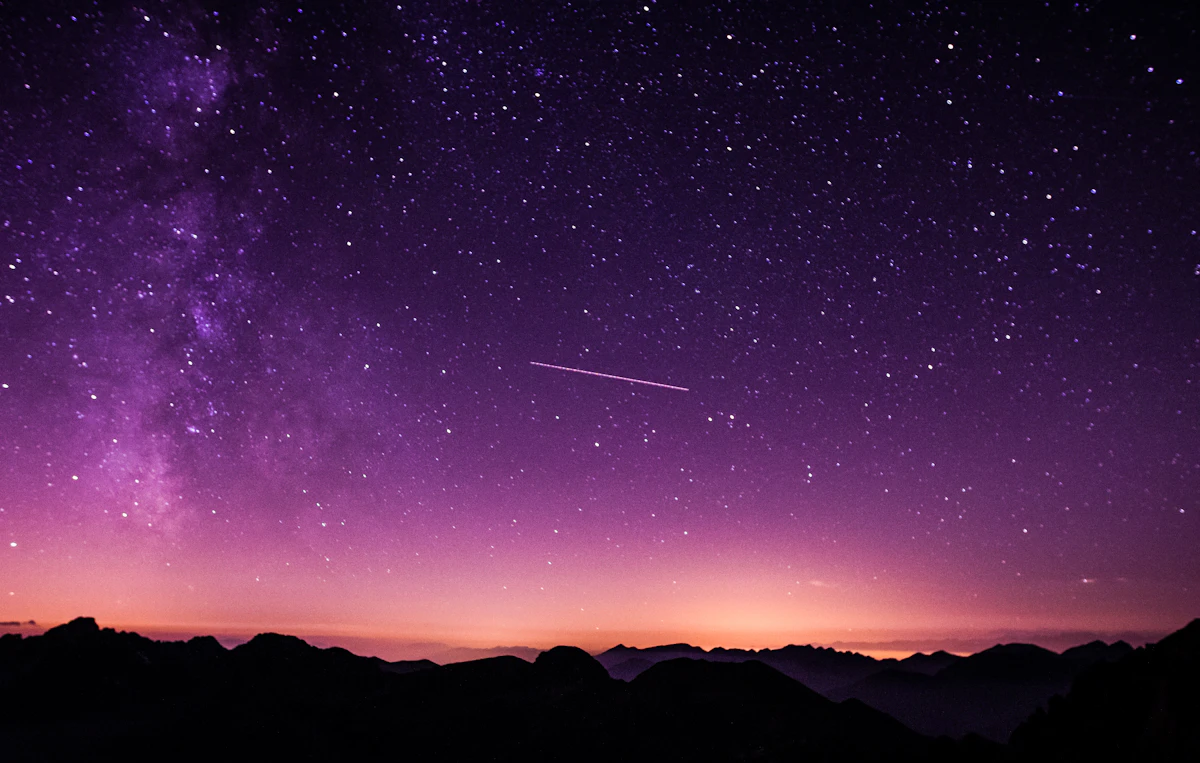
Do not stare at the radiant in Leo. Meteors can appear anywhere in the sky, and the longest, most beautiful ones often show up 40 or 50 degrees away from the radiant, near the horizon. Lie on your back with your feet pointing east and scan a wide area of sky, letting your eyes drift slowly rather than fixing on one star. The best window is from about 1 a.m. until the first light of dawn on November 18, when Leo is high in the east and Earth is ploughing nose-first into the dust stream. Earlier in the evening the radiant is still low, so the rates will be lower. If you can only watch for an hour, make it the hour before dawn. Bring a friend if you can: two pairs of eyes, one watching the north and one the south, will catch far more than one person alone.
Photographing the Leonids
A tripod turns a smartphone or a mirrorless camera into a viable meteor-capture tool. Set your camera to manual, open the aperture as wide as it goes, set the ISO to 1600 or 3200, and take continuous 15 to 20 second exposures aimed at a dark part of the sky away from the Moon. Most frames will be empty, and that is normal: meteor photography is a numbers game, and you may need a hundred frames to catch two or three good meteors. Do not use a telescope or binoculars for meteors; they cross too much sky too fast, and your naked eyes are the best instrument for the job. If you want a souvenir, a wide-angle timelapse of the whole night often captures a meteor or two and makes a wonderful record of the sky turning overhead.
The Leonids reward the patient. Pick the night of November 17-18, find the darkest sky you can reach, dress warm, lie back and let your eyes adapt. Fifteen meteors an hour sounds modest on paper, but under a cold, clear November sky, with the stars sharp overhead and a bright meteor suddenly streaking past Leo, it feels like the sky is putting on a show just for you.
More from FreeSky Cosmos