Mars and Jupiter Conjunction November 2026: When and Where to Look
- Primary Signal: Mars and Jupiter Conjunction November 2026: When and Where to Look
- Overview: Mars meets Jupiter in the pre-dawn sky on November 15-16, 2026, just 1.2 degrees apart. Here is when to look, what binoculars will show, and how to photograph the pair....
- Verification: Analyzed and compiled by FreeSky Cosmos editorial monitoring desk.
Two of the brightest planets in the sky are about to meet. On the mornings of November 15 and 16, 2026, reddish Mars draws close to brilliant Jupiter in the pre-dawn sky, the two planets appearing only about 1.2 degrees apart, close enough to fit in the same binocular field of view. It is the kind of event that needs no telescope and no expertise, just an early alarm and a clear eastern horizon. NASA's November skywatching guide lists it as one of the month's headline events, alongside the Taurid and Leonid meteor showers and the Beaver supermoon.
When and Where to Look
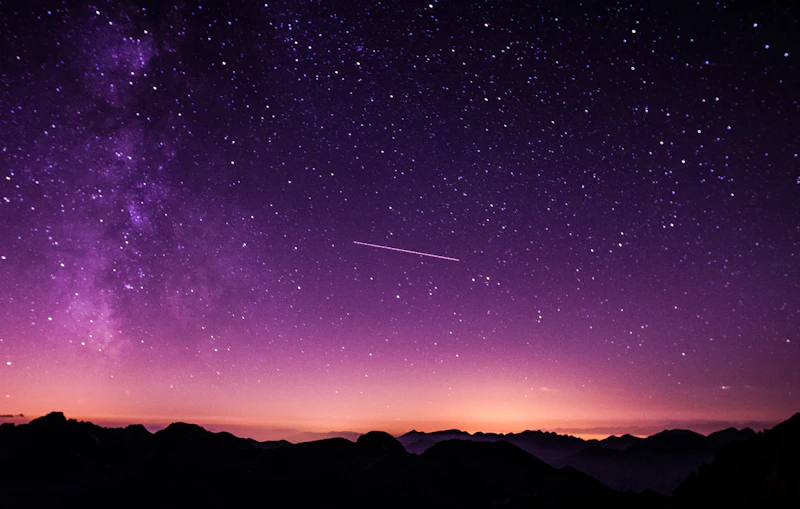
The conjunction is best seen in the hour before dawn on November 15 and 16, when both planets are climbing in the eastern sky. Jupiter is the easy one: it is the brightest star-like object in that part of the sky, shining at a magnitude far brighter than any real star, and it does not twinkle the way stars do. Mars sits just beside it, smaller and distinctly reddish-orange, and the colour contrast between the two is the real treat of this event. From mid-northern latitudes, look east about 60 to 90 minutes before your local sunrise. The pair will be high enough to clear rooftops and trees by then. From the southern hemisphere the geometry is similar, though the planets will appear lower in the north-east. A free sky app such as Stellarium will show you the exact spot from your location on the night itself.
What Is a Planetary Conjunction?
A conjunction happens when two planets appear close together in the sky from our point of view on Earth. The planets are not actually near each other in space: Jupiter is hundreds of millions of kilometres beyond Mars, and the two are simply lined up along the same line of sight. Conjunctions happen because the planets all orbit the Sun in roughly the same flat plane, the ecliptic, so from Earth they regularly drift past each other along that narrow band of sky. Mars and Jupiter meet roughly every two years, but each meeting looks different depending on how close they get and whether the Moon or the Sun interferes. This November the separation of about 1.2 degrees is tight enough to be striking and loose enough to watch comfortably with the naked eye.
What You Will See Through Binoculars
Binoculars turn this conjunction from a pretty pair of dots into a small show. Any ordinary pair of 10x50 binoculars will show Jupiter as a tiny bright disc with up to four of its moons, Io, Europa, Ganymede and Callisto, strung out in a line on either side. Mars will stay a small orange point, too small for binoculars to show any surface detail, but its colour beside Jupiter's white glare is unmistakable. Hold the binoculars steady, brace your elbows on a wall or a fence, or rest them on a beanbag, because even a small shake blurs a planet. Give your eyes a minute to settle: the moons of Jupiter are faint and easy to miss on the first glance, but once you have seen one, the others appear. If you have a small telescope, this is a wonderful night to use it: Jupiter's cloud bands and Mars's ruddy disc fit in the same low-power field of view.
How to Photograph the Conjunction
A smartphone on a small tripod can capture both planets in one frame. Use your phone's night mode or manual mode, keep the exposure short enough that the planets stay points rather than streaks, and include a rooftop or a tree line for scale. A camera with a zoom lens will do better: at 200mm or more, Jupiter's moons begin to show as tiny dots beside the planet, and Mars's colour comes through clearly. Take several shots and keep the sharpest. The best photographs of a conjunction are not the closest ones, but the ones that show the two planets together in context, hanging over a landscape in the blue light before dawn.
Why Bother Getting Up Early?
There is something quietly thrilling about standing outside in the cold dark and watching two worlds hang side by side. Mars and Jupiter will not be this close again in this configuration for another two years, and the November sky gives you a run of events in one fortnight: the Taurids, the Leonids, this conjunction and then the Beaver supermoon. Set the alarm for an hour before sunrise on November 15 or 16, make a hot drink, and step outside. The planets will be waiting, and they will not keep you waiting long.
More from FreeSky Cosmos