Why Do Stars Twinkle? The Simple Science Explained
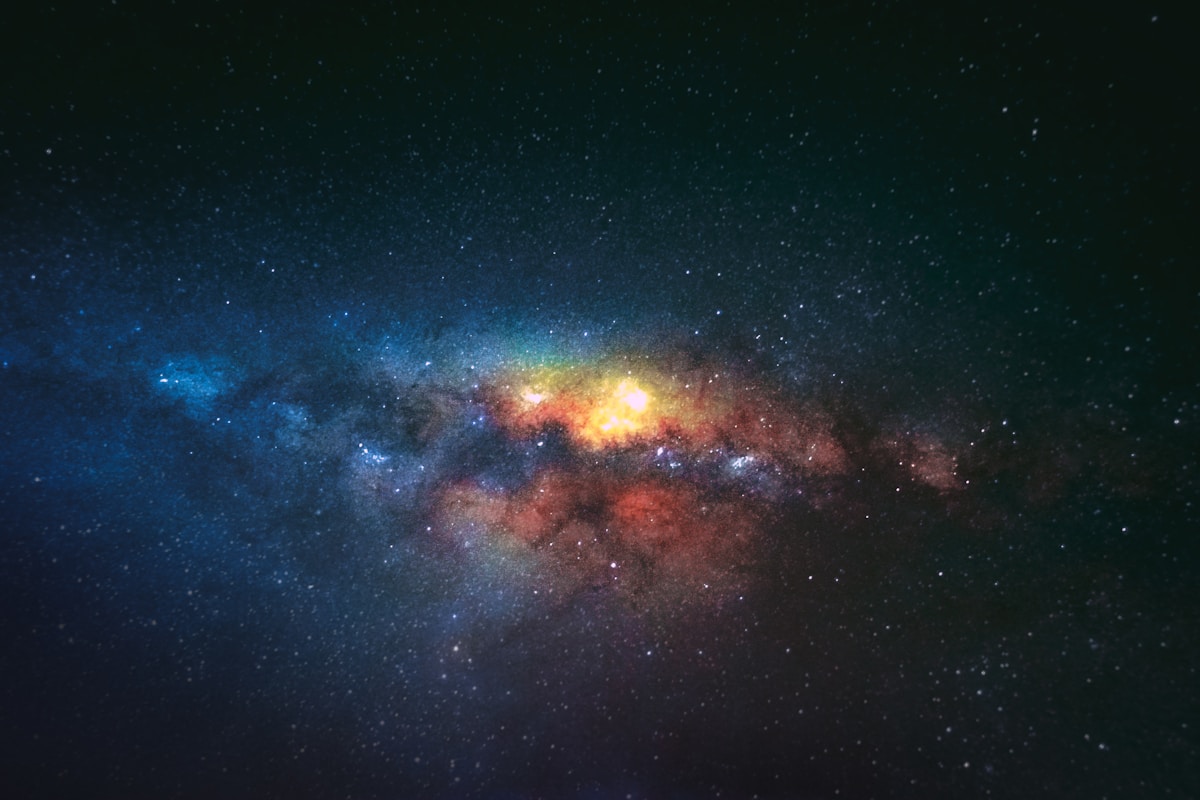
- Primary Signal: Why Do Stars Twinkle? The Simple Science Explained
- Overview: Stars do not actually flicker; Earth's turbulent atmosphere makes them appear to. Here is why stars twinkle, why planets do not, and what twinkling tells you about tonight's observ...
- Verification: Analyzed and compiled by FreeSky Cosmos editorial monitoring desk.
Stars twinkle, planets mostly do not, and the reason is not the stars themselves but the air above your head. Starlight travels for years through the vacuum of space without disturbance, then in the last fraction of a second it must cross Earth's turbulent atmosphere, where pockets of warm and cool air bend the light in constantly shifting ways. That bending makes a star's brightness and position flicker, and the effect is so familiar that songs and poems treat it as a property of stars, when it is really a property of our sky.
The key is size. Even through a telescope, a star remains essentially a point of light because it is so incredibly far away. Its light arrives along a single narrow path, so when a pocket of turbulent air bends that path, the star appears to jump, dim, and brighten rapidly. Planets, by contrast, are much closer and appear as tiny discs, so their light arrives along many slightly different paths that average out. Turbulence still affects each path, but the average stays fairly steady, which is why planets shine with a calm, unwavering light.
This difference is so reliable that experienced observers use it as a planet finding trick: scan the sky for bright lights that do not twinkle, and you have probably found Venus, Jupiter, or Mars. Stars near the horizon twinkle more than stars overhead, because their light passes through more atmosphere and more turbulence on its long, slanted journey. That is why stars low in the sky seem to dance wildly with colour, flashing red, blue, and white as different wavelengths are bent by different amounts.
Twinkling, which astronomers call scintillation, is more than a curiosity; it limits what ground based telescopes can see. A large telescope should in theory resolve tiny details, but atmospheric turbulence blurs the image to a size far larger than the telescope's true capability, a limit called seeing. On a night of poor seeing, stars look like bloated blobs, and planetary detail washes out. On a night of excellent seeing, when the air is steady, the same telescope reveals crisp detail that can rival images from space.
Astronomers fight turbulence in several ways. Observatories are built on high, dry mountaintops above much of the atmosphere, where the air is thinner and steadier. Modern telescopes use adaptive optics, deformable mirrors that change shape hundreds of times per second to cancel out the atmosphere's distortions in real time, guided by a laser created artificial star. Space telescopes avoid the problem entirely by orbiting above the atmosphere, which is one reason their images are so sharp despite modest mirror sizes.
For backyard observers, twinkling is a useful forecast. Rapid, violent twinkling usually means turbulent air and poor seeing, so that night is better suited to low power views of star clusters and the Moon than to high power planetary detail. Slow, gentle twinkling suggests steadier air, and those are the nights to push your telescope's magnification on Jupiter, Saturn, and Mars. Over time you will learn to judge the night's seeing within minutes of stepping outside, just by watching a bright star.
There is also beauty in the effect itself. The same turbulence that frustrates astronomers makes the night sky feel alive, with stars shimmering like candles in a breeze. Photographers capture it as sparkling star fields, and poets have celebrated it for centuries. So the next time you look up and see stars twinkling, remember you are not seeing the stars flicker at all; you are seeing Earth's restless air, the thin ocean of gas we live at the bottom of, making its presence known in the light of distant suns.
📖 Continue Reading the Full Story
Continue reading this article on FreeSky Cosmos.
⚡ Access Full Content NowMore from FreeSky Cosmos



 🛰️ FreeSky Aerial
How Do Pilots Land Planes in Thick Fog? Autoland Explained
When pilots can't see the runway, the autopilot takes over. Here's how ILS beams and autoland systems guide ai...
🛍️ Caylin Shop
9 TikTok Shop Dorm Room Essentials Under $20 That Actually Earn Their Space (2026)
Dorm rooms are tiny and budgets are tinier. These nine TikTok Shop finds under $20 — from shower caddies to mi...
 ⚡ CyberTech 568
Internet Latency Test: How Fast Is Your Connection?
Test your internet latency free. Get accurate ping measurements and learn what your numbers mean for gaming an...
 🤖 WinBar AI
Instagram Reels Downloader for PC: Save Reels Free Online
Download Instagram Reels to your PC free — no app, no login. Paste the reel link and save in HD quality straig...