Why Is the Night Sky Dark? The Paradox That Reveals an Expanding Universe
- Primary Signal: Why Is the Night Sky Dark? The Paradox That Reveals an Expanding Universe
- Overview: If the universe were infinite and filled with stars, every line of sight should end on a star and the night sky should blaze. It does not — and the reason rewrote cosmology....
- Verification: Analyzed and compiled by FreeSky Cosmos editorial monitoring desk.
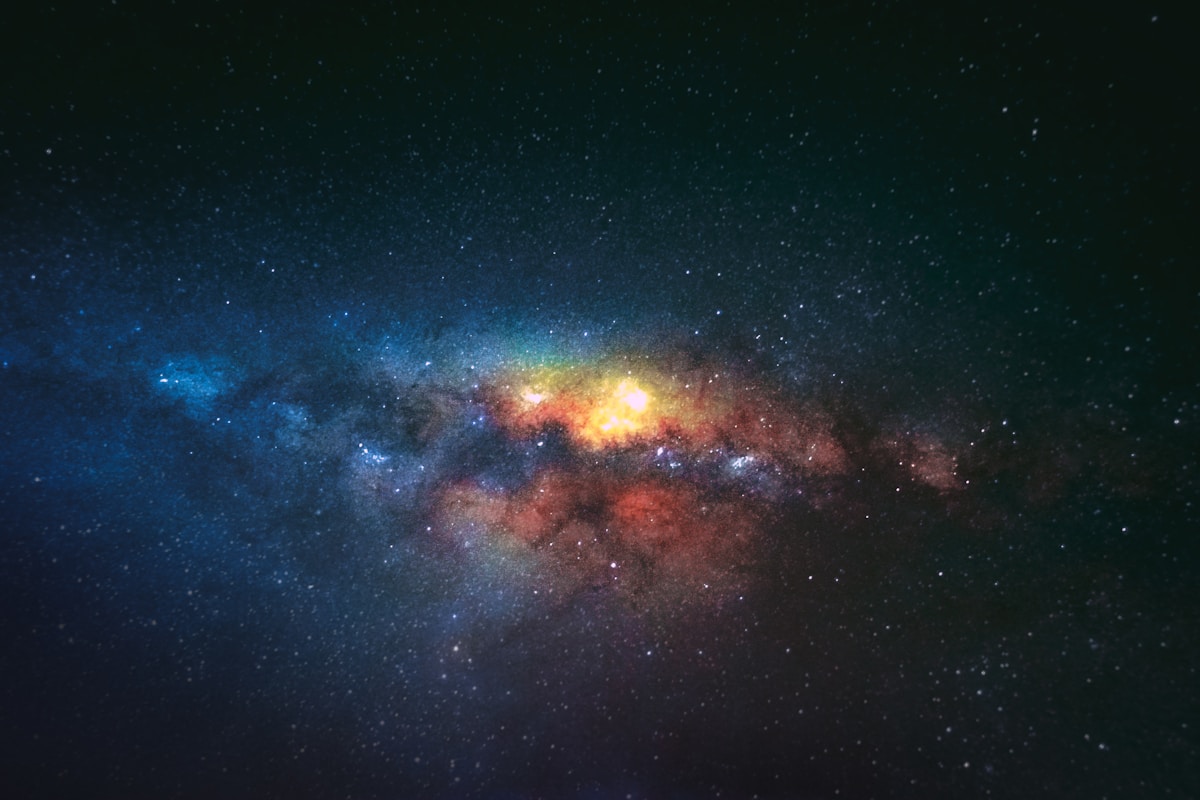
It sounds like a trick question, but it troubled astronomers for centuries: if the universe is infinite, eternal, and uniformly filled with stars, then wherever you look, your gaze should eventually land on a star. The whole night sky should glow as bright as the surface of the Sun. It does not. The darkness above us is a clue, and following it leads to the biggest discovery in cosmology.
Imagine standing in an endless forest where every direction eventually has a tree in it. No matter where you look, a tree blocks the view. The same logic applies to stars in an infinite, static universe. Even though distant stars are dimmer, there are more of them at greater distances, and the two effects exactly cancel out. Every point in the sky should be covered by a star's surface, and the night should be blindingly bright.
The paradox is named after Heinrich Olbers, who popularised it in the 1820s, though others had noticed it earlier. For a long time it sat unanswered, because the assumptions behind it seemed obvious: the universe is infinite, it has existed forever, and stars are spread roughly evenly through it. One of those assumptions had to be wrong.
📖 Continue Reading the Full Story
Continue reading this article on FreeSky Cosmos.
⚡ Access Full Content NowMore from FreeSky Cosmos

 📊 Try2Rich Capital
Startup Funding News Today, September 3, 2026: Backbone, Plenti, Rightcharge Outlier Space, Zeit AI, & More
Venture capital is shifting toward specialized AI, physical infrastructure, and software embedded in complex o...
 ⚡ CyberTech 568
Step-by-Step Tutorial: Playback Speed Calculator — Video Time at Any Speed (Day 2 Guide)
How to accurately use the Playback Speed Calculator — Video Time at Any Speed on CyberTech 568. Discover essen...
🤖 WinBar AI
Step-by-Step Tutorial: YouTube Thumbnail Downloader & Grabber — 4K (Day 2 Guide)
How to accurately use the YouTube Thumbnail Downloader & Grabber — 4K on WinBar AI. Discover essential practic...
 ☁️ FreeSky Cloud
ROI & Value Audit: GST Calculator — Add or Extract GST & VAT (Day 15 Guide)
How to save time and eliminate guesswork with GST Calculator — Add or Extract GST & VAT on FreeSky Cloud. Disc...