Why the Moon Looks Bigger Near the Horizon: The Illusion Explained
- Primary Signal: Why the Moon Looks Bigger Near the Horizon: The Illusion Explained
- Overview: The Moon is actually slightly farther away at moonrise — its giant size near the horizon is a trick your brain plays, not optics....
- Verification: Analyzed and compiled by FreeSky Cosmos editorial monitoring desk.
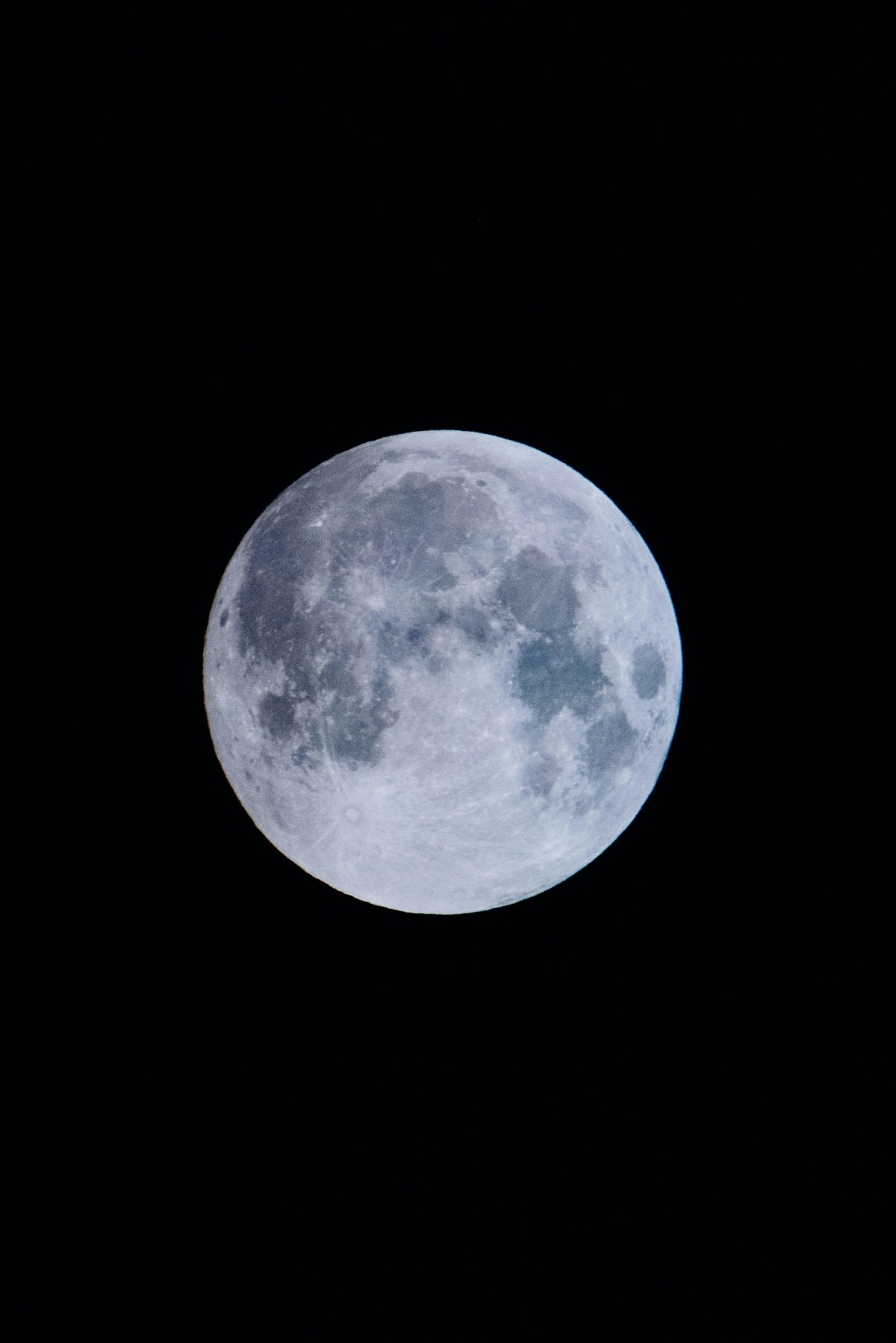
Everyone has seen it: a huge Moon rising over rooftops or hills, looking far larger than the modest disc high in the sky later that night. The effect is so convincing that many people assume the atmosphere magnifies the Moon like a lens, but measurements show the opposite. Photographs prove the Moon's apparent size barely changes through the night, and it is actually slightly farther from you at moonrise than when overhead, because of Earth's geometry. The giant Moon is an illusion created by your brain, not by the sky.
The lens idea feels plausible, because the atmosphere does bend light and redden the Moon near the horizon, just as the Sun reddens at sunset. But refraction compresses the Moon's image vertically, squashing it slightly, rather than enlarging it, and the effect is far too small to explain the dramatic size change people report. If you hold your thumb at arm's length next to the rising Moon and again when it is high, you will find it covers about the same amount of thumb in both positions, a simple test that defeats the illusion on the spot.
Photography confirms the point: the same camera and lens record the same Moon diameter at moonrise and at midnight, within tiny variations from distance and optics. The illusion persists because it happens in perception, not in the light reaching your eye, so no camera can reproduce it. That is why the effect feels so real and yet vanishes in a photograph, a mismatch that has puzzled observers for centuries and inspired experiments in psychology as well as astronomy.
The leading explanations involve how the brain judges size against context. When the Moon sits near the horizon, it appears among familiar objects, trees, buildings, and hills, and the brain unconsciously treats the sky as a flattened dome, closer overhead than at the horizon. An object that subtends the same angle at the eye is therefore judged larger when it seems farther away, the same logic that makes a person look bigger at the end of a long corridor. High in the sky, with no reference objects nearby, the brain has no such cues and the Moon shrinks back to its true apparent size.
Experiments support this account: viewing the Moon through a tube that blocks the surroundings reduces the illusion, and the effect varies with the landscape, stronger over open terrain with clear foreground cues. Children and adults experience it differently in detail, but the basic illusion is universal, which suggests it is built into how human vision estimates size and distance. It is not a flaw so much as a shortcut that usually works on Earth, where objects near the horizon really are farther away, and it simply misfires on the Moon.
The best way to enjoy a Moon illusion is to watch a full Moon rise over a landscape with clear foreground objects, which maximises the effect, and to bring a friend who has never noticed it before. Try the thumb test, or photograph the Moon at moonrise and again an hour later with identical settings, and compare the two frames side by side. You will see the same disc in both, and the contrast between the photograph and your memory of the giant Moon is itself a memorable lesson in how perception works.
Supermoons add a genuine, if modest, size change on top of the illusion: when the full Moon coincides with its closest approach to Earth, it appears about fourteen percent larger than at its farthest, a difference most people cannot reliably notice without comparison. The horizon illusion, by contrast, can feel like a doubling, which is why it dominates the experience. Knowing it is an illusion does not spoil it; it turns a familiar sight into a small experiment you can repeat every month, with your own brain as the subject.
📖 Continue Reading the Full Story
Continue reading this article on FreeSky Cosmos.
⚡ Access Full Content NowMore from FreeSky Cosmos


 🛰️ FreeSky Aerial
How Do Pilots Land Planes in Thick Fog? Autoland Explained
When pilots can't see the runway, the autopilot takes over. Here's how ILS beams and autoland systems guide ai...
 ⚡ CyberTech 568
Step-by-Step Tutorial: Playback Speed Calculator — Video Time at Any Speed (Day 2 Guide)
How to accurately use the Playback Speed Calculator — Video Time at Any Speed on CyberTech 568. Discover essen...
 🤖 WinBar AI
Instagram Photo Downloader: Save Posts in Full Resolution
Download Instagram photos in original quality. Save posts, carousel images, and profile pictures free....
 ☁️ FreeSky Cloud
ROI & Value Audit: GST Calculator — Add or Extract GST & VAT (Day 15 Guide)
How to save time and eliminate guesswork with GST Calculator — Add or Extract GST & VAT on FreeSky Cloud. Disc...