What Is a Nebula? How Clouds of Gas and Dust Build New Stars
- Primary Signal: What Is a Nebula? How Clouds of Gas and Dust Build New Stars
- Overview: Nebulae are the nurseries of the universe: vast clouds of gas and dust where gravity builds new stars, and where dying stars return their material to space....
- Verification: Analyzed and compiled by FreeSky Cosmos editorial monitoring desk.
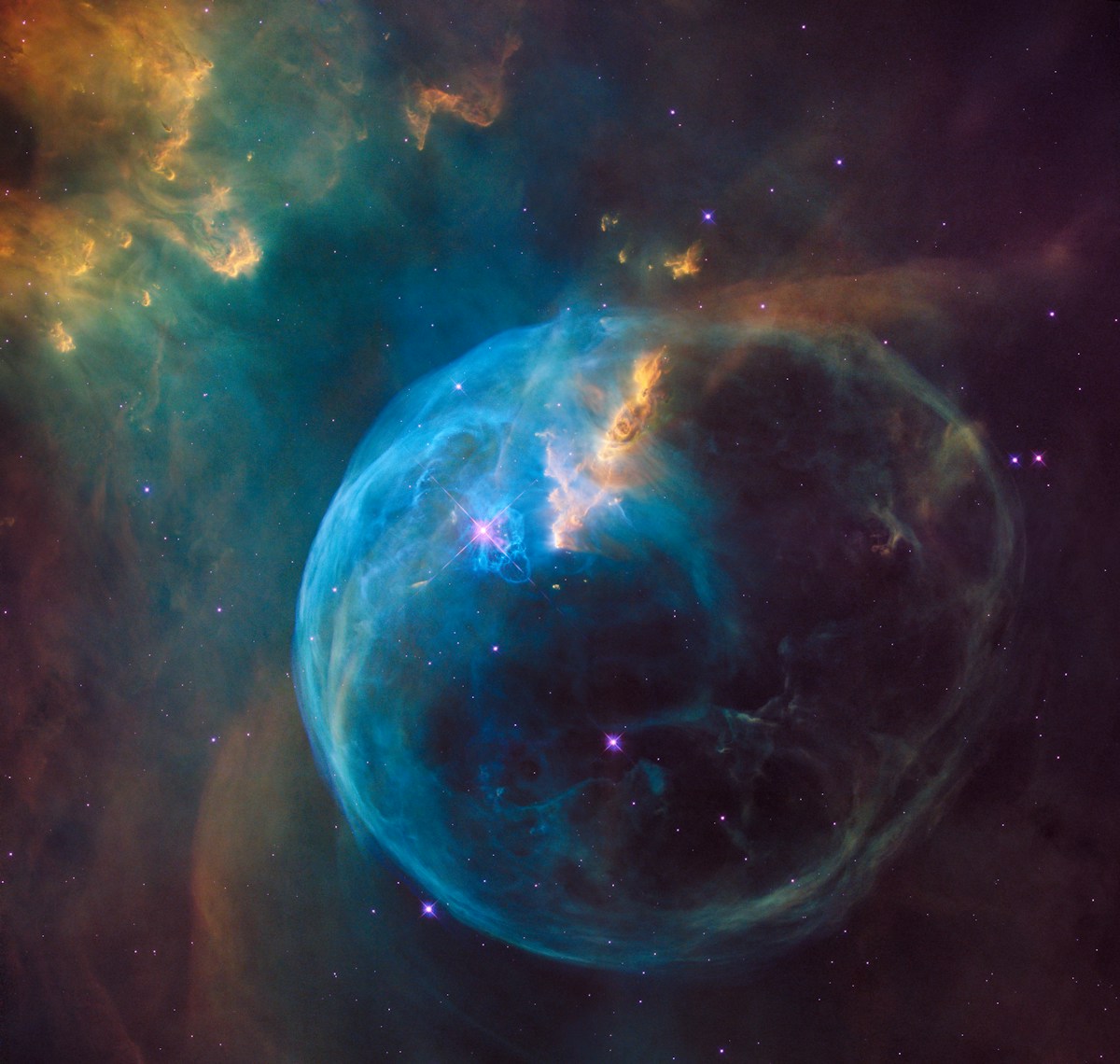
Point a telescope at a dark patch of sky and you may find a nebula: a glowing cloud, sometimes spanning light-years, where the raw material of stars hangs in space. The word comes from the Latin for cloud, and the name fits. But nebulae are not all the same. Some are stellar nurseries, some are stellar graveyards, and telling them apart reveals the whole life cycle of stars.
The most photogenic nebulae are emission nebulae, clouds of hydrogen gas lit from within by hot young stars. The stars' ultraviolet light makes the gas glow, usually pink or red in photographs, like a neon sign powered by starlight. The Orion Nebula, visible to the naked eye as a fuzzy patch in Orion's sword, is the classic example and one of the best first targets for a small telescope.
Reflection nebulae do not glow on their own. They shine by reflecting the light of nearby stars, usually with a blue tint, because dust scatters blue light more efficiently than red, the same physics that makes Earth's sky blue. Dark nebulae do the opposite: they are cold, dense clouds that block background starlight, appearing as black silhouettes against the Milky Way. All three types are the same basic stuff, seen under different lighting.
📖 Continue Reading the Full Story
Continue reading this article on FreeSky Cosmos.
⚡ Access Full Content NowMore from FreeSky Cosmos


 📊 Try2Rich Capital
Startup Funding News Today, September 3, 2026: Backbone, Plenti, Rightcharge Outlier Space, Zeit AI, & More
Venture capital is shifting toward specialized AI, physical infrastructure, and software embedded in complex o...
 ⚡ CyberTech 568
Step-by-Step Tutorial: Playback Speed Calculator — Video Time at Any Speed (Day 2 Guide)
How to accurately use the Playback Speed Calculator — Video Time at Any Speed on CyberTech 568. Discover essen...
🤖 WinBar AI
Step-by-Step Tutorial: YouTube Thumbnail Downloader & Grabber — 4K (Day 2 Guide)
How to accurately use the YouTube Thumbnail Downloader & Grabber — 4K on WinBar AI. Discover essential practic...
 ☁️ FreeSky Cloud
ROI & Value Audit: GST Calculator — Add or Extract GST & VAT (Day 15 Guide)
How to save time and eliminate guesswork with GST Calculator — Add or Extract GST & VAT on FreeSky Cloud. Disc...