James Webb vs Hubble Images Explained: Why the Same Sky Looks So Different
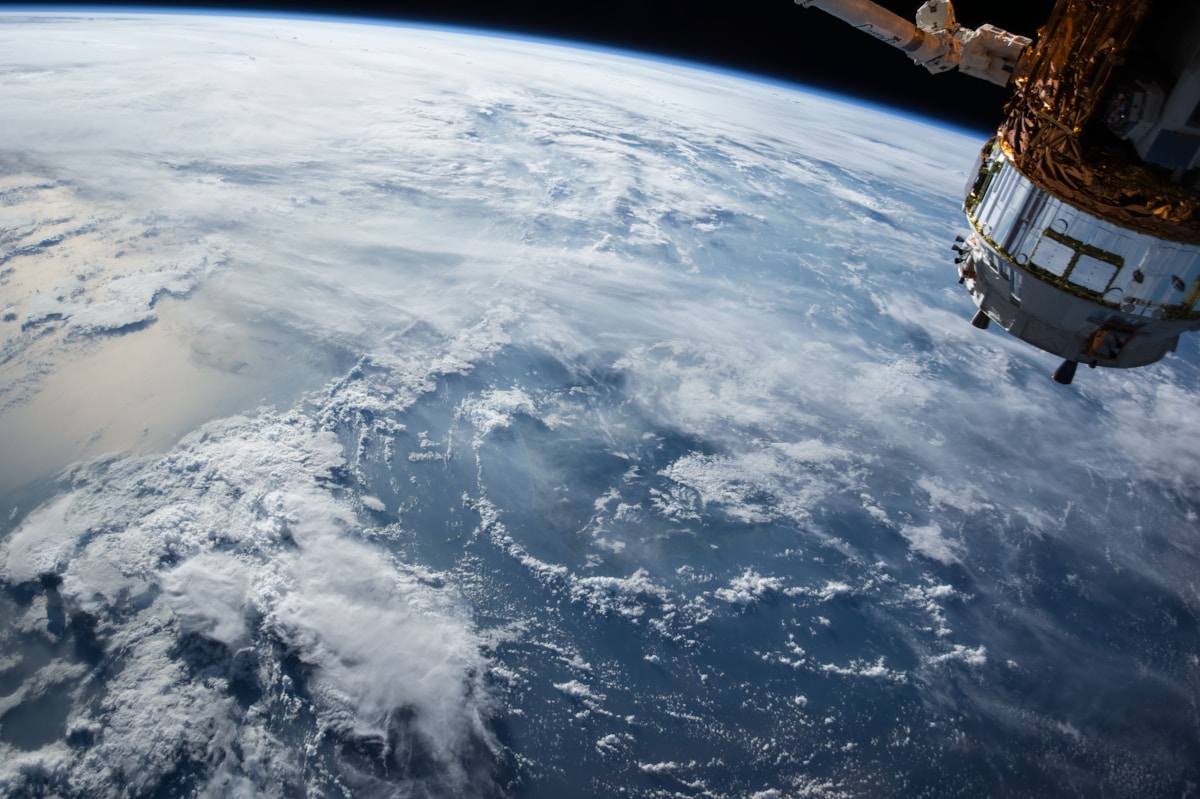
- Primary Signal: James Webb vs Hubble Images Explained: Why the Same Sky Looks So Different
- Overview: Webb and Hubble photograph the same universe in different kinds of light, which is why their images of the same objects can look strikingly different....
- Verification: Analyzed and compiled by FreeSky Cosmos editorial monitoring desk.
Put a Hubble image and a James Webb image of the same nebula side by side and they can look like different places, even though both telescopes are showing real light from the same object. The difference is not better cameras in a simple sense; it is that the two observatories see different slices of the electromagnetic spectrum. Hubble works mainly in visible and ultraviolet light, the kind our eyes evolved to use, while Webb is tuned to infrared, the heat-like light that passes through dust and stretches across the expanding universe.
Many of the most photogenic clouds in space are also dusty, and dust blocks visible light the way smoke blocks a view across a valley. Hubble therefore photographs the glowing surface of a stellar nursery, sculpted and lit from outside, while Webb's infrared vision slips through the dust and reveals the newborn stars hidden inside. That is why Webb images of famous nebulae suddenly show hundreds of extra stars and swirling discs of material where Hubble showed a smooth wall of gas: the stars were always there, just veiled.
The same logic applies to distant galaxies. As the universe expands, the light from the earliest galaxies is stretched toward longer, redder wavelengths, a shift that pushes much of it out of Hubble's range and into Webb's. Webb can therefore photograph galaxies whose light set out when the universe was very young, while Hubble's view of the same patch of sky shows fewer, nearer objects. Neither view is wrong; they are two chapters of the same story told in different light.
Both telescopes record light our eyes cannot fully use, so astronomers translate their data into colour for display, and this is where confusion often starts. Hubble images combine filters to approximate natural colour, while Webb images map infrared wavelengths to visible colours so we can inspect them at all. A red region in a Webb image does not mean the object glows red to a human eye; it usually means the light arrived at a longer infrared wavelength, and the colour is a code for that information.
This translation is standard scientific practice, not decoration, and the underlying data remain measurements of brightness at specific wavelengths. When you read an image caption, look for which filters or wavelengths were used: that tells you whether you are looking at hot young stars, warm dust, or cold gas. Learning to read those captions turns a pretty picture into a genuine observation, and it explains why the same object can wear several different colour schemes across releases.
For nearby, bright objects in visible light, Hubble remains superb, and its decades-long archive lets astronomers watch changes over time, from storm systems on planets to the slow brightening of supernova remnants. For the coldest, dustiest, and most distant targets, Webb is the natural choice, including exoplanet atmospheres, where infrared light carries the chemical fingerprints of water, carbon dioxide, and other molecules. The telescopes complement each other rather than compete: Hubble maps the lit surfaces, Webb probes what lies behind and beyond them.
The practical lesson for anyone following space news is to ask what wavelength an image used before judging it. If a Webb image looks unfamiliar, check whether dust or distance is the reason; if a Hubble image looks sharper in visible detail, that may simply be the right tool for that target. Together, the pair gives a fuller picture of the universe than either could alone, and future observatories will extend the same idea into still more wavelengths.
📖 Continue Reading the Full Story
Continue reading this article on FreeSky Cosmos.
⚡ Access Full Content NowMore from FreeSky Cosmos

 🛰️ FreeSky Aerial
How Do Pilots Land Planes in Thick Fog? Autoland Explained
When pilots can't see the runway, the autopilot takes over. Here's how ILS beams and autoland systems guide ai...
 ⚡ CyberTech 568
Step-by-Step Tutorial: Playback Speed Calculator — Video Time at Any Speed (Day 2 Guide)
How to accurately use the Playback Speed Calculator — Video Time at Any Speed on CyberTech 568. Discover essen...
 🤖 WinBar AI
Instagram Photo Downloader: Save Posts in Full Resolution
Download Instagram photos in original quality. Save posts, carousel images, and profile pictures free....
 ☁️ FreeSky Cloud
ROI & Value Audit: GST Calculator — Add or Extract GST & VAT (Day 15 Guide)
How to save time and eliminate guesswork with GST Calculator — Add or Extract GST & VAT on FreeSky Cloud. Disc...