How to See Saturn's Rings With Binoculars: A Practical Beginner's Guide
- Primary Signal: How to See Saturn's Rings With Binoculars: A Practical Beginner's Guide
- Overview: Saturn's rings are visible in ordinary 10x50 binoculars if you know what to look for and hold them steady. This guide covers timing, technique, and realistic expectations....
- Verification: Analyzed and compiled by FreeSky Cosmos editorial monitoring desk.
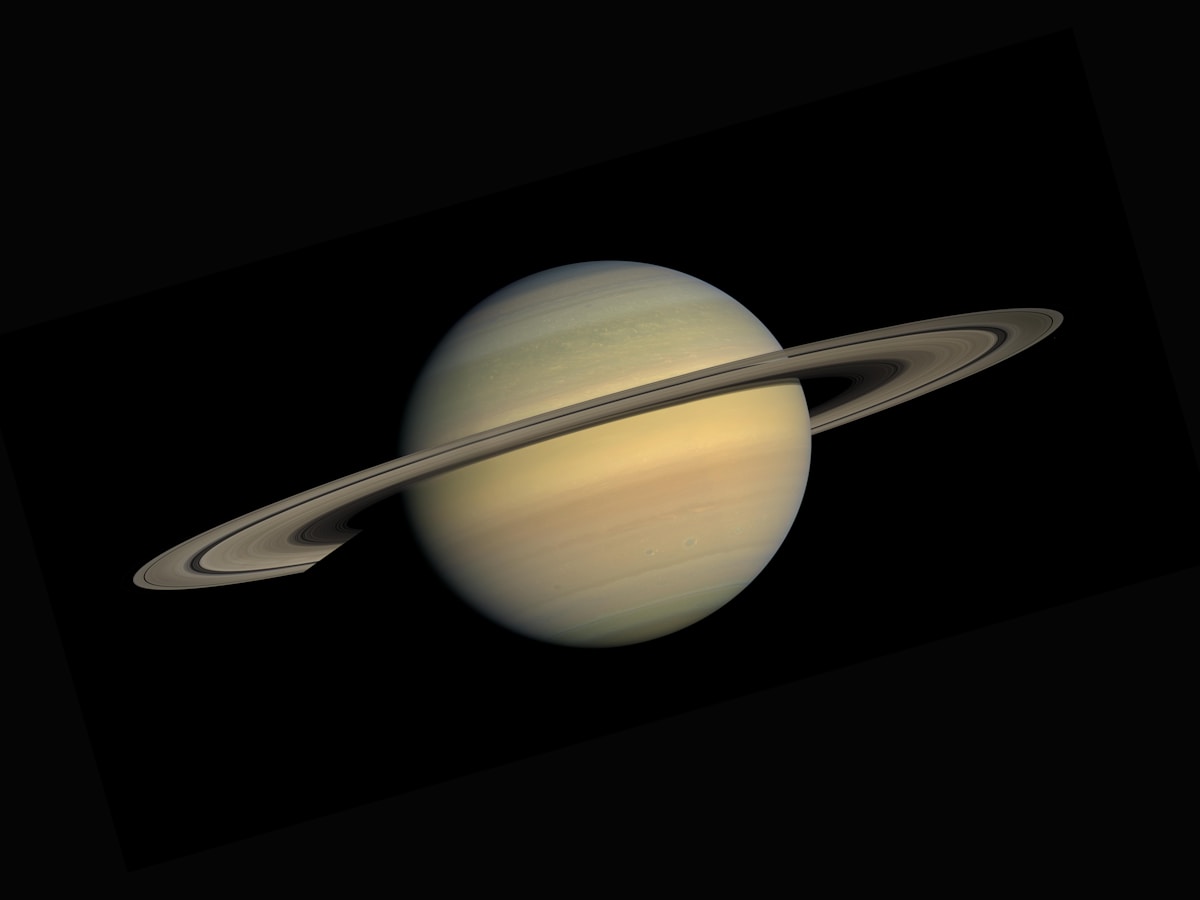
Saturn through 10x50 binoculars does not look like a photograph from a space probe, and setting honest expectations is the key to enjoying the view. At ten times magnification the planet appears as a tiny golden oval, distinctly elongated rather than round, and that elongation is the ring system itself, seen almost edge-on or slightly open depending on the year. On a steady night you may also glimpse Titan, Saturn's largest moon, as a faint star-like point nearby. That small golden pill shape is one of the most rewarding sights in amateur astronomy precisely because it is real and hard-won.
The rings' tilt changes over Saturn's 29-year orbit, and during the mid-2020s the rings are narrowing toward edge-on, which makes them subtler than they were a decade ago. They are still detectable, but the effect is more like a thin line through the planet than a wide brim. This is worth knowing before your first attempt, because many beginners give up believing their binoculars are too weak, when in fact they were looking at exactly the right thing and expecting a Hubble image.
Magnification magnifies shake as well as planets, so stability matters more than optical quality for this target. Rest your elbows on a fence, wall, or car roof, or lean against something solid, and hold the binoculars with both hands, thumbs underneath. A reclining garden chair helps because Saturn sits high in the evening sky during opposition season, and craning your neck while shaking guarantees a blurry view. Some observers rest the binoculars on a beanbag on a railing, which works surprisingly well.
A simple tripod adapter, which costs very little, transforms the experience entirely and is worth buying before a bigger telescope. With the binoculars fixed, the golden oval sharpens and the ring elongation becomes obvious rather than suspected. Spend at least five minutes on the target rather than a quick glance: your eye learns to pick out detail over time, and moments of steady air will periodically snap the view into focus. Patience is the real instrument here.
The best nights are around opposition, when Saturn is closest to Earth and visible all night, and on evenings with calm, transparent air rather than merely clear skies. A planet low near the horizon shimmers through thick atmosphere, so wait until Saturn climbs at least 20 degrees above the horizon. Use a free planetarium app to confirm you are aimed at the right golden star-like object; Saturn does not twinkle the way stars do, which is itself a useful identification clue.
Once you have seen the rings in binoculars, the natural next step is a small telescope, where the rings resolve into a clear ellipse and the Cassini Division gap may appear. But do not rush past the binocular stage. Many experienced observers return to binoculars for wide-field comet sweeps and Milky Way scanning, and the skill of finding planets by star-hopping serves you for life. Record the date, your binoculars, and what you saw; a simple observing log turns isolated nights into a visible record of progress.
A last piece of advice is to observe Saturn more than once. The planet's appearance changes subtly with atmospheric conditions, and a night of steady air can reveal the ring elongation far more clearly than a turbulent one. Return on a second or third evening, compare your impressions, and note which conditions produced the sharpest view; you will quickly develop an instinct for good seeing that serves every other target you pursue. Saturn reaches opposition roughly once a year, and each apparition offers weeks of good viewing, so there is no pressure to succeed on a single night. The golden oval you learn to recognise tonight will still be there tomorrow, patiently waiting for a steadier sky.
📖 Continue Reading the Full Story
Continue reading this article on FreeSky Cosmos.
⚡ Access Full Content NowMore from FreeSky Cosmos



 ⚡ CyberTech 568
How to Write Better Prompts for AI Image Generation: A Beginner's Guide
Good AI images start with specific prompts. Learn to describe subject, style, lighting and composition so the ...
 🛰️ FreeSky Aerial
How to Shoot a Drone Hyperlapse: A Beginner's Step-by-Step Guide
A hyperlapse turns a slow drone flight into a spectacular rushing video. Pick a subject with a clear path, use...
 🤖 WinBar AI
Decision-Making Framework: GST Calculator — Add or Extract GST & VAT (Day 28 Guide)
How data from our GST Calculator — Add or Extract GST & VAT on WinBar AI. Discover essential eliminates bias, ...
 🎁 Get Rich Free
Side hustles you can start from your phone today: A Practical Beginner's Guide
This guide explains side hustles you can start from your phone today in plain language, with practical steps, ...