How Rockets Land Themselves: The Catch, the Flip and the Landing Burn
- Primary Signal: How Rockets Land Themselves: The Catch, the Flip and the Landing Burn
- Overview: A rocket booster falling from space, flipping around, reigniting its engines and landing upright looks like magic. It is a sequence of precise, violent manoeuvres — and it is becom...
- Verification: Analyzed and compiled by FreeSky Cosmos editorial monitoring desk.
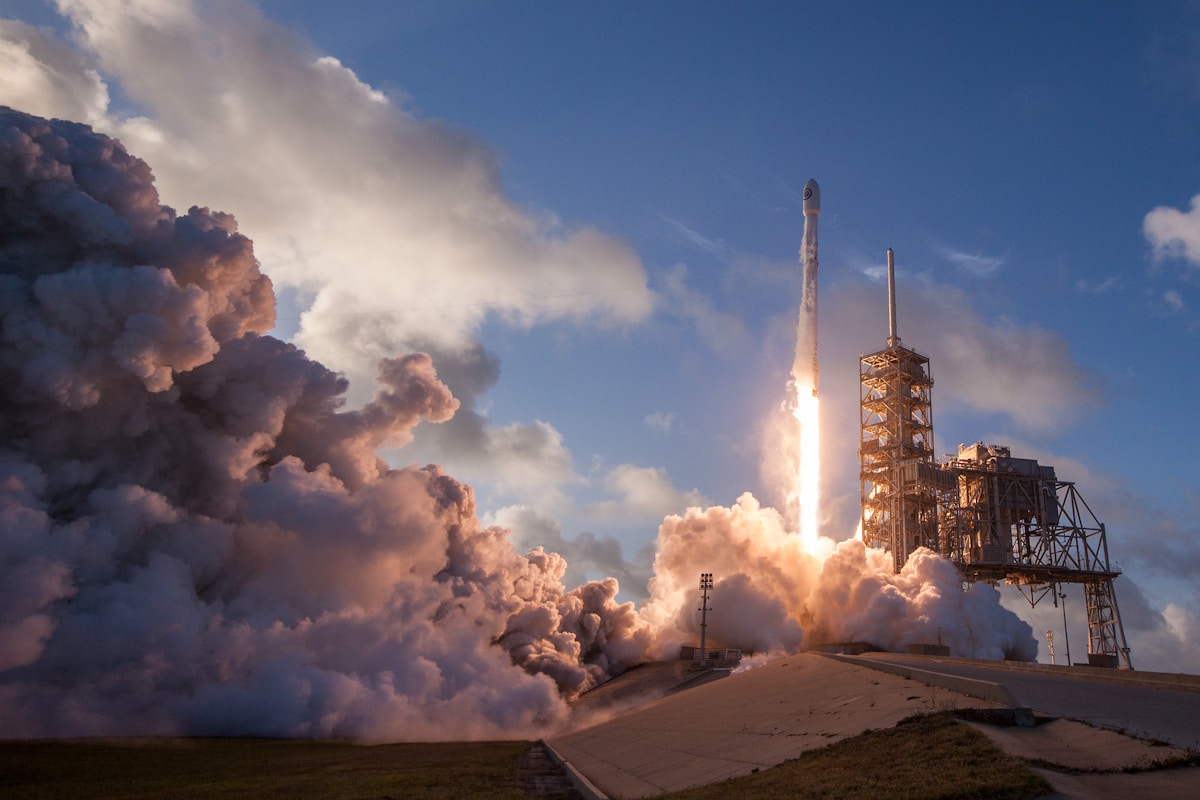
Watch a booster landing and it looks impossible: a building-sized cylinder drops out of the sky, flips end over end, fires its engines at the last possible moment, and sets itself down gently on legs or into a tower's arms. Every part of that sequence is a controlled crisis, and it works because the rocket plans the whole fall before it ever leaves the launch pad.
After separation, the booster is travelling fast, high, and in the wrong direction for landing. Its first job is the boostback burn, a short engine firing that cancels some of its forward speed and aims it back toward the landing site. Then comes the manoeuvre that makes audiences gasp: the booster flips around so its engines point in the direction of travel, using small thrusters and grid fins, the waffle-iron panels that unfold from the top of the booster.
Grid fins are the unsung heroes of landing. They steer the booster through the atmosphere the way a skydiver's arms steer a body, providing control when the booster is falling at supersonic speeds and its engines are off. Without them, the booster would tumble. With them, it can fly a guided path to a precise point on the ground, or to the arms of a catch tower.
📖 Continue Reading the Full Story
Continue reading this article on FreeSky Cosmos.
⚡ Access Full Content NowMore from FreeSky Cosmos


 🛰️ FreeSky Aerial
How Do Pilots Land Planes in Thick Fog? Autoland Explained
When pilots can't see the runway, the autopilot takes over. Here's how ILS beams and autoland systems guide ai...
 🗺️ FreeSky GeoData
Land Surface Temperature Mapping With Landsat in QGIS: A Step-by-Step Guide
Landsat's thermal band lets you map surface temperature across a whole city or landscape. This guide walks thr...
 ⚡ CyberTech 568
Step-by-Step Tutorial: Playback Speed Calculator — Video Time at Any Speed (Day 2 Guide)
How to accurately use the Playback Speed Calculator — Video Time at Any Speed on CyberTech 568. Discover essen...
🤖 WinBar AI
Step-by-Step Tutorial: YouTube Thumbnail Downloader & Grabber — 4K (Day 2 Guide)
How to accurately use the YouTube Thumbnail Downloader & Grabber — 4K on WinBar AI. Discover essential practic...