NASA Awards Enable Research, Technology to Build Future Workforce
Story summary
NASA has selected 12 U.S. institutions to receive $12 million to accelerate academic research and technology development in support of the agency’s priorities for exploring the Moon, Mars, and deep space. Through NASA’s Minority University Research and Education Project (MUREP) Space Technology Arte
📌 Key Highlights & Takeaways
- NASA has selected 12 U.S.
- institutions to receive $12 million to accelerate academic research and technology development in support of the agency’s priorities for exploring the Moon, Mars, and deep space.
- Through NASA’s Minority University Research and Education Project (MUREP) Space Technology Arte
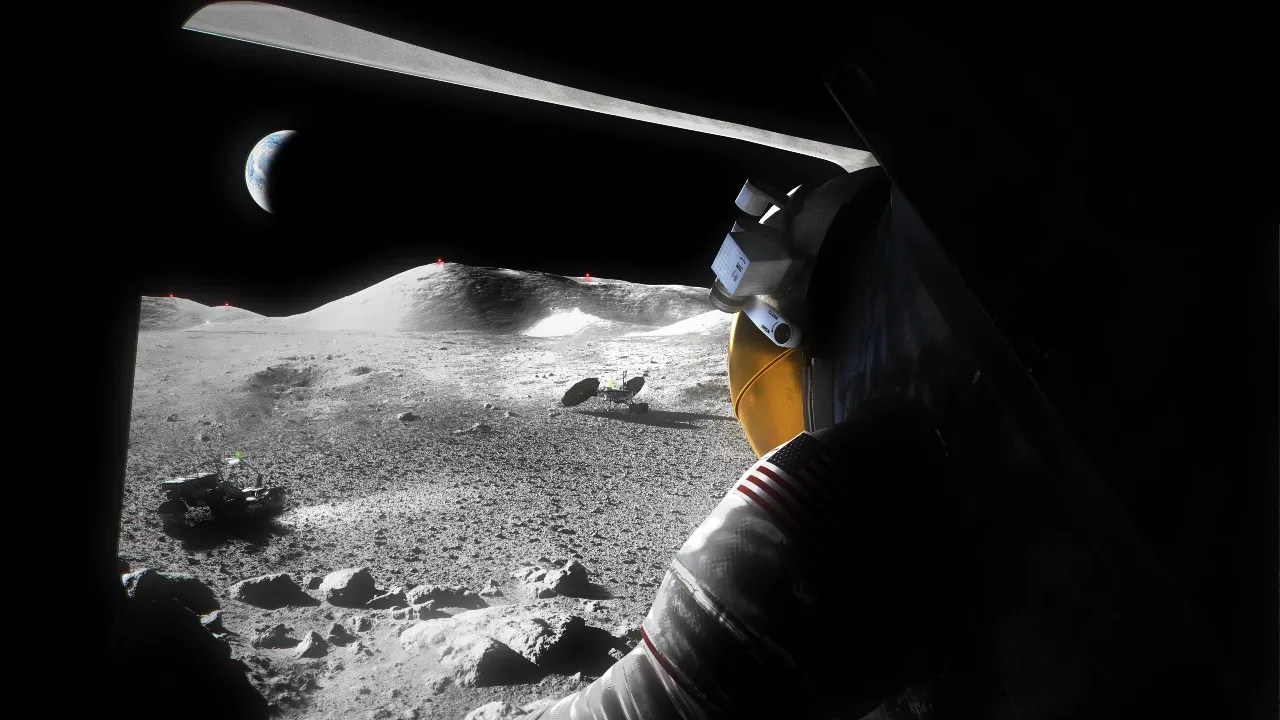
NASA has selected 12 U.S. institutions to receive $12 million to accelerate academic research and technology development in support of the agency’s priorities for exploring the Moon, Mars, and deep space.
Through NASA’s Minority University Research and Education Project (MUREP) Space Technology Artemis Research ( M‑STAR ) initiative, selected institutions will each receive up to $1 million to grow their scientific and engineering capabilities, enhance faculty and student engagement in aerospace research, and expand their ability to compete for future federal and commercial research awards.
“We are excited to launch this new cohort of M-STAR investigators,” said Alicia Baturoni Cortez, MUREP program manager in the agency’s Office of STEM Engagement. “NASA investments in our Nation’s research institutions create real opportunities for students and faculty to build skills, knowledge, and infrastructure, while helping NASA close technology gaps for long-duration operations on the Moon and eventually, Mars.”
As NASA enters a Golden Age of innovation and exploration, the M-STAR initiative supports the agency’s mission to develop innovative technologies that improve space transportation, human exploration, robotic discovery, and the growing space economy.
The awardees and their projects are as follows:
California State University, Sacramento Adaptive Vision-Language-Action Models for Resilient Multi-Robot Collaboration in Unstructured Planetary Environments
University of Central Florida, Orlando M-FAST: Multi-Fidelity Aerothermal Simulation & Testing for Artemis
University of Hawaii at Manoa HI-STRIDE: Hawai’i Student Training in Radiation Instrumentation, Detection, and Exploration
Cryptographic Security & Key Generator
Generate entropy-tested high-security keys and encryption-grade tokens.
Source: NASA.
Read the full story at the original source ↗
For questions: mrsmithcons@gmail.com.
More from FreeSky Cosmos