How Astronauts Sleep on the ISS: Sleeping Bags, Schedules, and 16 Sunrises
- Primary Signal: How Astronauts Sleep on the ISS: Sleeping Bags, Schedules, and 16 Sunrises
- Overview: There is no up or down on the space station, so astronauts sleep in tethered bags in phone-booth-sized cabins, on a strict schedule despite 16 sunrises a day....
- Verification: Analyzed and compiled by FreeSky Cosmos editorial monitoring desk.
Sleeping in space sounds like floating peacefully through the night, but the reality is more structured. On the International Space Station, astronauts sleep in small private cabins, strapped into sleeping bags attached to the wall, following a strict daily schedule. Without gravity, everything about bedtime has to be redesigned, from the bed itself to the very idea of night and day.
Each crew member has a personal crew quarter, roughly the size of a phone booth, with a sleeping bag tethered to the wall, a lamp, a vent, a laptop, and space for personal items. There is no mattress and no pillow in the usual sense, because without gravity there is no weight pressing down on the body. The sleeping bag keeps the astronaut from drifting into equipment during the night and gives a gentle, wrapped pressure that many astronauts find comforting. Some crew members fashion a pillow from a bag of clothes, and the bag itself often has a rigid section to press against the back, mimicking the feeling of lying down.
One detail surprises most people: sleeping near a vent is a safety requirement, not a comfort choice. In weightlessness, the carbon dioxide you exhale does not rise and disperse the way it does on Earth; it can pool around your head. A steady flow of ventilated air prevents that build-up. Noise is another challenge, since fans, pumps, and equipment run around the clock. Earplugs and eye masks are standard kit, and the cabin's padded walls help dampen both sound and the constant station hum.
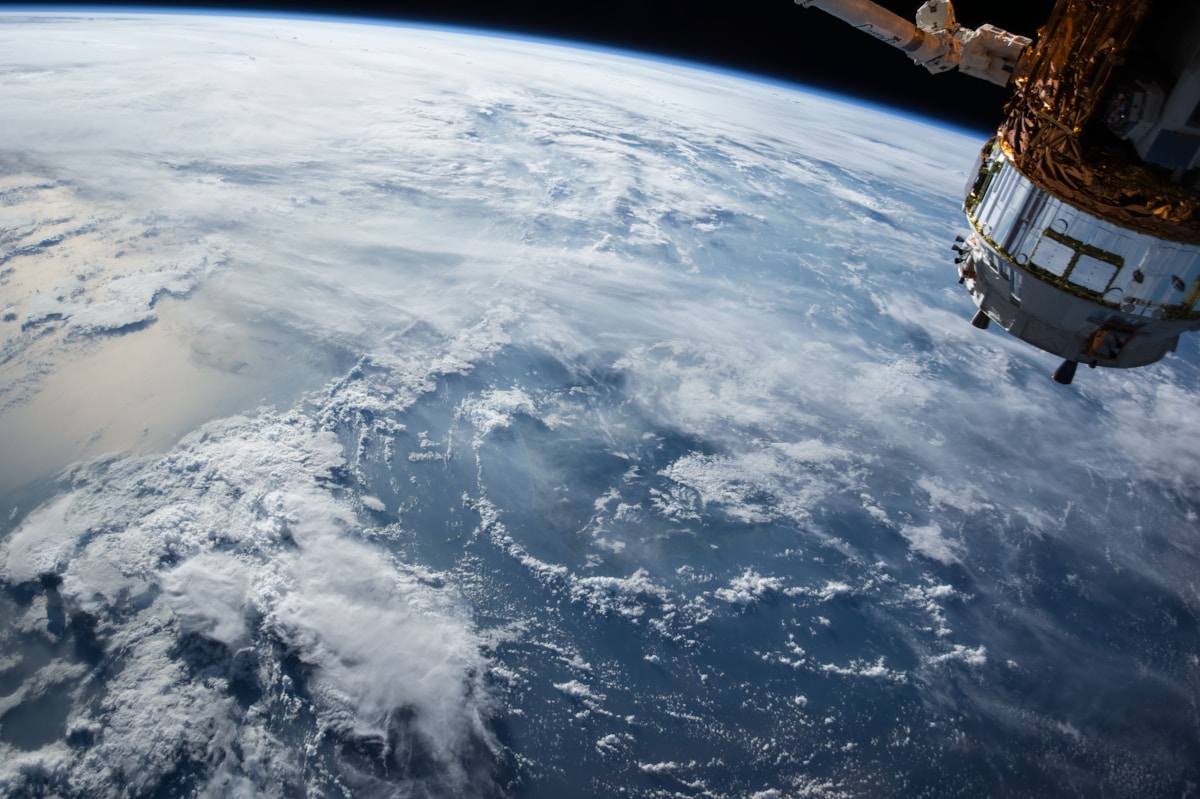
The station orbits Earth roughly every ninety minutes, which means the crew sees about sixteen sunrises and sunsets in a single day. A natural day-night cycle is impossible, so the station runs on Coordinated Universal Time with a fixed schedule: a typical day starts around 6 a.m. UTC, with about eight and a half hours set aside for sleep. Lighting inside the station is adjusted to support that rhythm, brighter and bluer during work hours and dimmer and warmer before sleep. Even so, many astronauts report sleeping closer to six hours in practice, and researchers study their sleep closely because tired crews make more mistakes.
Astronaut sleep research has practical lessons for shift workers and anyone with an irregular schedule: keep a consistent sleep window, control light exposure, block noise, and treat the wind-down routine as part of the job rather than an afterthought. Astronauts follow those rules in one of the most extreme environments humans live in, and they still manage to work, exercise, and run experiments the next morning. If a phone-booth cabin orbiting at 28,000 kilometres per hour can support a good night's rest, a dark, quiet bedroom on Earth certainly can.
Sleep is only one part of the station's tightly scheduled day. Astronauts exercise for about two hours daily to counteract muscle and bone loss in microgravity, using a treadmill with harnesses, a stationary bike, and a resistance device. Meals are scheduled around work blocks, and the crew eats together when schedules allow, which matters for morale on a six-month mission. Even leisure is scheduled: an hour or so of personal time in the evening, often spent looking out of the cupola windows at Earth or calling family.
That structure exists because microgravity removes many of the natural cues that organise a day on Earth: no sunrise to wake you, no weight to tire you, no evening darkness unless you create it. The schedule replaces those cues, and sleep sits at its centre. Astronauts who protect their sleep window tend to perform better and feel better, which is why flight surgeons treat sleep as a mission resource rather than a personal preference.
📖 Continue Reading the Full Story
Continue reading this article on FreeSky Cosmos.
⚡ Access Full Content NowMore from FreeSky Cosmos


 🛰️ FreeSky Aerial
How to Sleep on a Long-Haul Flight in Economy Class
Sleeping in economy is a skill: window seat, the right gear, destination-timed sleep and smart hydration. Here...
🛍️ Caylin Shop
9 TikTok Shop Dorm Room Essentials Under $20 That Actually Earn Their Space (2026)
Dorm rooms are tiny and budgets are tinier. These nine TikTok Shop finds under $20 — from shower caddies to mi...
⚡ CyberTech 568
10 Free AI Tools That Save Freelancers 10 Hours a Week
Ten genuinely free AI tools for writing, design, and admin — build them into your workflow and reclaim roughly...
 🤖 WinBar AI
How to Spot Sharp Money Movement in Betting Odds Before the Line Settles
Sharp money is professional cash moving odds before the public catches on. Here is how to read reverse line mo...