Starship vs Falcon Heavy Comparison: Which Rocket Does What Best
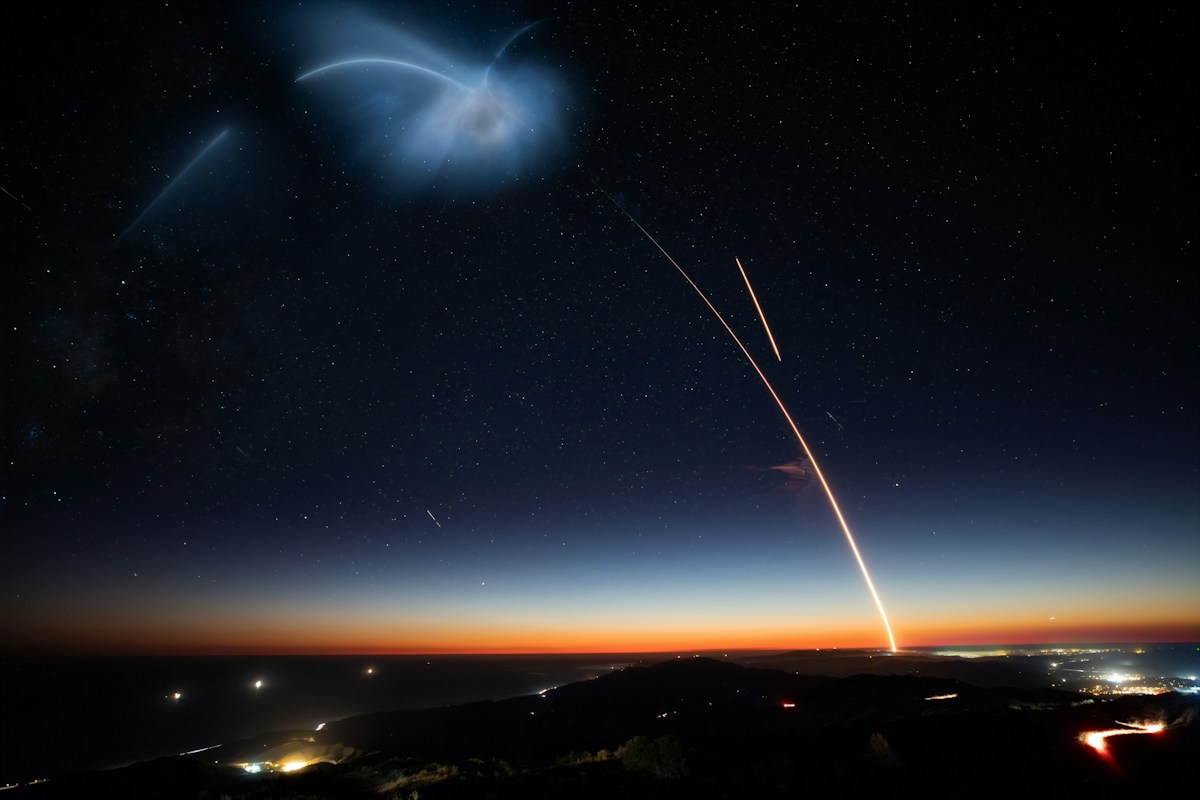
- Primary Signal: Starship vs Falcon Heavy Comparison: Which Rocket Does What Best
- Overview: Falcon Heavy is the proven heavy lifter of today; Starship is the fully reusable giant designed to make heavy lift routine — they answer different questions....
- Verification: Analyzed and compiled by FreeSky Cosmos editorial monitoring desk.
SpaceX operates two very different heavy rockets, and comparing them is less about which is bigger than about which job each one was built to do. Falcon Heavy, flying since 2018, is three Falcon 9 boosters strapped together, a proven design that has launched military satellites, interplanetary probes, and heavy commercial payloads. Starship is a new, fully reusable system, a giant booster plus a spacecraft second stage, designed to carry far more mass and, eventually, people to the Moon and Mars at a cost low enough to fly often.
On raw lift, Starship is in a different class: its planned payload to low Earth orbit is roughly double or more that of Falcon Heavy, and its cavernous payload bay can carry objects too large for any existing fairing. Falcon Heavy's advantage is maturity: it has flown real missions, its boosters land and refly, and customers can buy a launch with a known price and schedule. Starship, by contrast, is still in test flights, proving its heat shield, its booster catch, and its orbital refuelling plans, so its advertised capability is a goal being demonstrated step by step, not yet a catalogue service.
Reusability is the deeper difference. Falcon Heavy recovers its side boosters and sometimes its centre core, but its upper stage is expended on every flight, which caps how cheap it can become. Starship is designed to recover both stages, booster and ship, so that the whole vehicle flies again like an aircraft, with refuelling as the main recurring cost. If that works reliably, the cost per kilogram to orbit could fall dramatically, changing which missions are affordable at all.
Falcon Heavy suits missions that need proven reliability now: launching a flagship science probe, a heavy national-security satellite, or a payload to a high-energy orbit where a single launch must succeed. Its flight record, its integration with existing launch sites, and its compatibility with standard payload adapters make it the safe choice for expensive, irreplaceable cargo. Customers with a launch window that cannot slip, or a spacecraft that cannot wait for a test programme to mature, will usually choose the proven rocket.
Starship suits missions that need extreme mass, volume, or cadence: deploying hundreds of satellites, sending large habitats to the Moon, or refuelling a spacecraft in orbit for a Mars journey. Its size lets mission designers stop folding spacecraft into tiny packages, which can simplify and cheapen the spacecraft itself. Until its reliability is proven, though, it will carry test articles, Starlink batches, and cargo that can tolerate risk, with crewed flights following only after a long record of safe operation.
The two rockets may overlap for years, with Falcon Heavy handling the missions that need certainty and Starship taking on the missions that need scale. That overlap is normal in aerospace: new vehicles do not instantly replace old ones, they earn trust mission by mission. If Starship achieves rapid, full reusability, it will gradually absorb Falcon Heavy's market, just as Falcon 9 absorbed much of the market before it, and Falcon Heavy may retire or serve niche roles.
For space watchers, the milestones to track are concrete: successful booster catches, repeated flights of the same ship, orbital refuelling demonstrations, and the first paying cargo beyond Earth orbit. Each one moves Starship from promise toward service, and each one clarifies when Falcon Heavy's era as the heavy lifter ends. The comparison, in the end, is not a contest but a handover in progress, between a rocket that proved reusability could work and one designed to prove it can scale.
📖 Continue Reading the Full Story
Continue reading this article on FreeSky Cosmos.
⚡ Access Full Content NowMore from FreeSky Cosmos



 ☁️ FreeSky Cloud
Best Free Tier Cloud Hosting for Side Projects in 2026: An Honest Comparison
Free tiers hide three different things: always-free, free-but-asleep, and free-as-a-trial. This comparison mat...
 🗺️ FreeSky GeoData
How Much Does a Missed Call Cost a GIS Consultancy?
One missed call is not a voicemail — it is a project worth thousands walking to a competitor. The step-by-step...
 ⚡ CyberTech 568
Step-by-Step Tutorial: Playback Speed Calculator — Video Time at Any Speed (Day 2 Guide)
How to accurately use the Playback Speed Calculator — Video Time at Any Speed on CyberTech 568. Discover essen...
 🤖 WinBar AI
Instagram Photo Downloader: Save Posts in Full Resolution
Download Instagram photos in original quality. Save posts, carousel images, and profile pictures free....