What Are Exoplanets and How Do Scientists Find Them? Transits, Wobbles, and Images
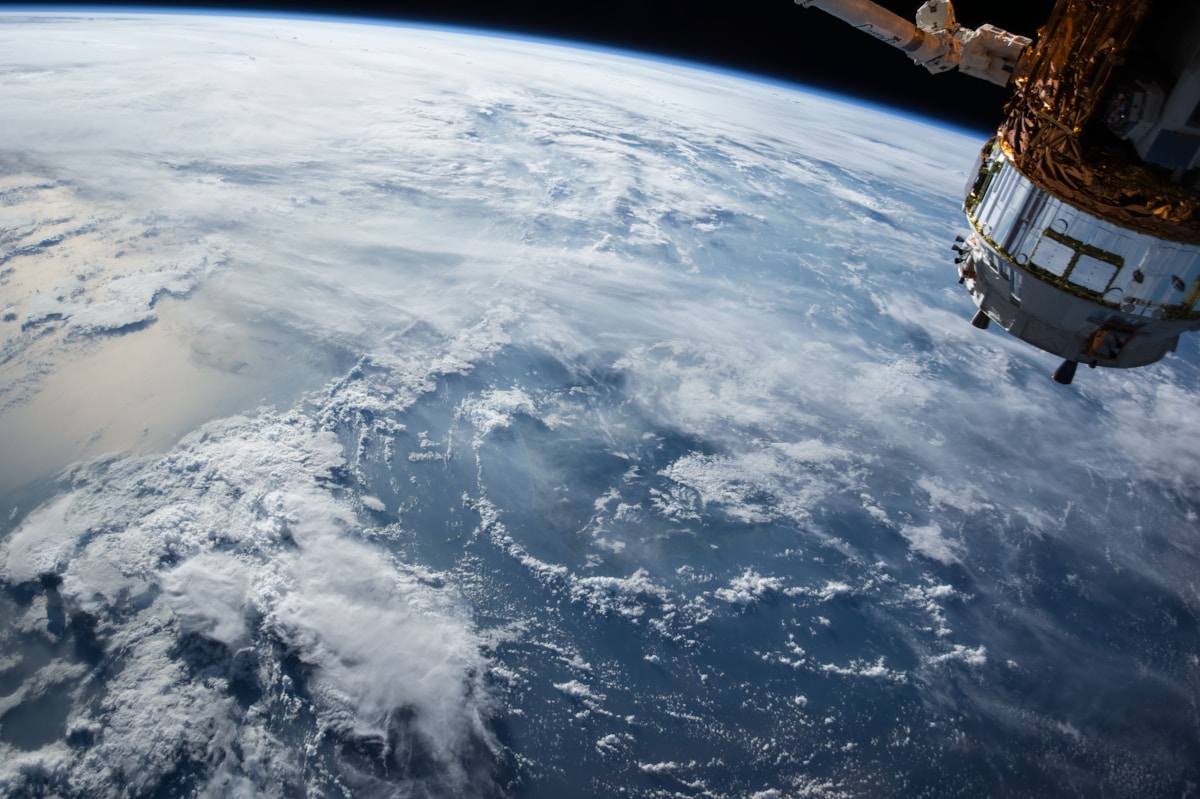
- Primary Signal: What Are Exoplanets and How Do Scientists Find Them? Transits, Wobbles, and Images
- Overview: Exoplanets are faint, distant, and hard to see — yet scientists have found thousands. Transits, stellar wobbles, and direct imaging each reveal a different piece of the puzzle....
- Verification: Analyzed and compiled by FreeSky Cosmos editorial monitoring desk.
Exoplanets are planets orbiting stars other than our Sun, and scientists have now confirmed thousands of them. The challenge is not just finding them, but understanding what they are like. Are they rocky or gaseous? Hot or cold? Do they have atmospheres? Answering those questions requires clever techniques, because exoplanets are incredibly faint compared with their host stars, often billions of times dimmer.
The most productive method so far is the transit method. When a planet passes in front of its star as seen from Earth, it blocks a tiny fraction of the star's light, causing a small, regular dip in brightness. By measuring the depth and timing of that dip, astronomers can estimate the planet's size and orbital period. If the dip repeats regularly, it is a strong sign of a real planet rather than a random fluctuation.
During a transit, some starlight also filters through the planet's atmosphere, if it has one. By splitting that light into a spectrum, scientists can look for the fingerprints of gases such as water, carbon dioxide, and methane. This is how Webb studies exoplanet atmospheres in detail, turning a tiny dip in brightness into a chemical inventory of a distant world.
Another major method is radial velocity, often called the wobble method. A planet's gravity tugs on its star, causing the star to move slightly toward and away from us. That motion shifts the star's light to slightly bluer or redder wavelengths, a Doppler effect that sensitive spectrographs can measure. Combined with transit data, radial velocity gives a planet's mass, and mass plus size gives density, which hints at whether a planet is rocky, icy, or gaseous.
Direct imaging is the hardest method, because it requires blocking out the star's glare to see the faint planet beside it. It works best for young, hot, large planets far from their stars, and it has produced stunning images of exoplanets as points of light. Microlensing, which uses the bending of light by gravity, can detect planets far across the galaxy, including some that no other method can find, though those planets are usually too distant for follow-up study.
Not every exoplanet is equally interesting. Scientists prioritise planets in the habitable zone, where temperatures could allow liquid water on the surface, and planets whose size and density suggest a rocky composition. Even then, habitability is a question of many factors, including atmosphere, magnetic field, and stellar activity, not just distance from a star.
The search for exoplanets has changed our view of the universe. We now know that planets are common, that solar systems come in many architectures, and that Earth-like worlds may be widespread, even if we have not yet found an exact twin. Each new detection method adds another piece to that picture, and Webb and future telescopes will keep refining it.
Future telescopes will push exoplanet science further by imaging Earth-sized planets directly and by measuring their atmospheres with greater precision. Space telescopes designed for direct imaging will use coronagraphs or starshades to block starlight, while ground-based extremely large telescopes will use adaptive optics to sharpen images through Earth's atmosphere. Together, they may finally let us study a potentially habitable world in detail.
Until then, the best approach for readers is to follow confirmed discoveries rather than unconfirmed claims. A planet announced as potentially habitable still needs follow-up observations to confirm its size, mass, atmosphere, and orbit. That careful process is slow, but it is what turns an exciting candidate into a reliable piece of knowledge about our galaxy.
📖 Continue Reading the Full Story
Continue reading this article on FreeSky Cosmos.
⚡ Access Full Content NowMore from FreeSky Cosmos

 ⚡ CyberTech 568
Best Free AI Voice Changer for Gaming in 2026
A good voice changer adds fun to game night without lag or robotic audio. Compare the best free options for Di...
 🤖 WinBar AI
How to Spot Sharp Money Movement in Betting Odds Before the Line Settles
Sharp money is professional cash moving odds before the public catches on. Here is how to read reverse line mo...
 ☁️ FreeSky Cloud
Best Free Tier Cloud Hosting 2026: Host Projects Without Paying
Compare the best free tier cloud hosting options for 2026, including what is genuinely free, what limits apply...
 🛰️ FreeSky Aerial
How to Carry Medications on International Flights: 2026 Rules
Flying with medication in 2026? This guide covers carry-on rules, the 100 ml exemption for liquid medicines, l...