MoM-z14: The Bright Galaxy Webb Found Just 280 Million Years After the Big Bang
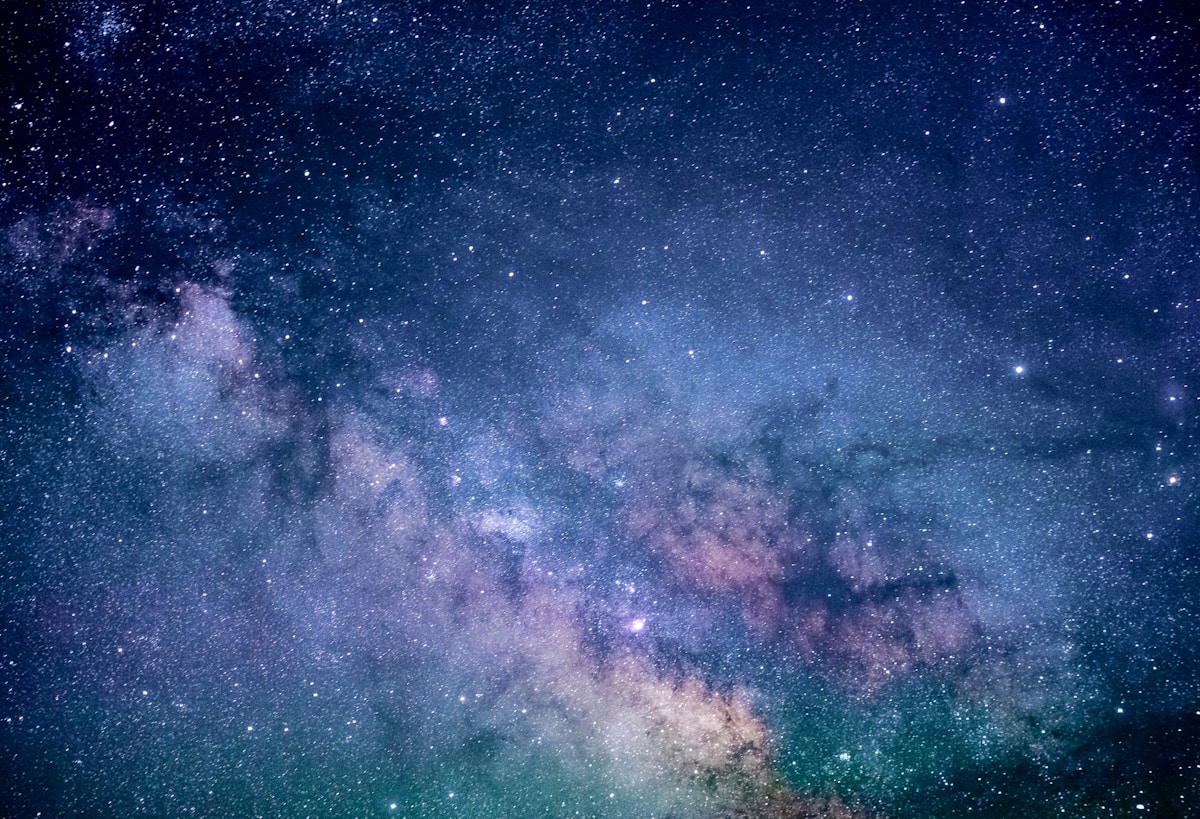
- Primary Signal: MoM-z14: The Bright Galaxy Webb Found Just 280 Million Years After the Big Bang
- Overview: MoM-z14 is one of the earliest galaxies ever confirmed, seen as it was 280 million years after the Big Bang. Webb's spectrum reveals a surprisingly mature young universe....
- Verification: Analyzed and compiled by FreeSky Cosmos editorial monitoring desk.
In January 2026, NASA reported the confirmation of MoM-z14, a galaxy seen as it existed only 280 million years after the Big Bang. Its light has travelled through expanding space for about 13.5 billion years to reach us, stretched by cosmic expansion to a redshift of 14.44 measured by Webb's Near-Infrared Spectrograph. It is among the most distant and earliest galaxies ever confirmed, a direct look at the universe when it was barely two percent of its current age.
Redshift is the key to this measurement. As the universe expands, light from distant objects stretches toward longer, redder wavelengths, and the amount of stretching reveals how far back in time we are looking. A redshift of 14.44 is extreme: it means the light we see left MoM-z14 when the universe was still in its infancy, during an era astronomers call cosmic dawn, when the first stars and galaxies were switching on and lighting up the darkness left by the Big Bang.
What makes MoM-z14 surprising is not just its age but its brightness. Early Webb results have repeatedly shown that the young universe formed galaxies faster and more vigorously than many pre-launch models predicted, with bright, massive systems appearing earlier than expected. MoM-z14 fits that pattern: a luminous galaxy in an era when models once expected only small, faint building blocks gradually assembling. Each such discovery forces theorists to revise how quickly gas could collapse into stars.
The measurement itself showcases Webb's core strength. Its infrared instruments can capture light that started as ultraviolet in the young galaxy and has been stretched deep into the infrared by cosmic expansion, wavelengths that ground telescopes and even Hubble struggle to reach. The Near-Infrared Spectrograph splits that faint light into a spectrum, and the sharp break in the spectrum where hydrogen absorbs the light gives a precise redshift, turning a candidate smudge into a confirmed distance.
MoM-z14 also helps constrain the timeline of reionization, the era when the first stars' ultraviolet light ionised the hydrogen gas filling the universe, making it transparent. Bright early galaxies like this one were likely major contributors to that transformation, and counting them tells astronomers whether starlight alone could have reionized the universe on the observed schedule, or whether other sources such as early black holes were also needed.
For the public, the appeal of MoM-z14 is simpler and more profound: we are looking at a galaxy that existed before Earth, before the Sun, before the Milky Way had taken shape, and we can measure its distance and brightness with confidence. Every record-breaking galaxy pushes the frontier of observable time a little further back, and the frontier is now within a few hundred million years of the Big Bang itself.
Future observations will study MoM-z14's chemical composition, star formation rate and shape in more detail, testing whether its stars are unusually massive or its gas unusually enriched for its age. Webb's mission is still young, and the early universe keeps surprising us. If the pattern holds, MoM-z14 will not keep its record for long, and that is exactly how science should work.
The deeper lesson is that the first billion years of cosmic history were busier than we thought. Galaxies were forming, shining and shaping their surroundings far earlier than textbooks written before Webb suggested, and the story of how we got from a hot, dark universe to the structured cosmos we inhabit is being rewritten in real time.
MoM-z14 is also a useful reminder of how young this science is: before Webb launched, no galaxy had been confirmed at such an early epoch, and each new record forces a fresh round of model-building. Expect the record to fall again, and treat each new earliest galaxy as a clue rather than a final answer.
📖 Continue Reading the Full Story
Continue reading this article on FreeSky Cosmos.
⚡ Access Full Content NowMore from FreeSky Cosmos

 🎉 FreeFortune Rewards
Cashback Apps That Pay Real Money in 2026: 7 Picks Worth Your Phone Space
Not every cashback app is worth installing, but a handful have long payout records and genuinely free tiers. H...
 📊 Try2Rich Capital
Startup Funding News Today, September 3, 2026: Backbone, Plenti, Rightcharge Outlier Space, Zeit AI, & More
Venture capital is shifting toward specialized AI, physical infrastructure, and software embedded in complex o...
 ⚡ CyberTech 568
Step-by-Step Tutorial: Playback Speed Calculator — Video Time at Any Speed (Day 2 Guide)
How to accurately use the Playback Speed Calculator — Video Time at Any Speed on CyberTech 568. Discover essen...
🤖 WinBar AI
Step-by-Step Tutorial: YouTube Thumbnail Downloader & Grabber — 4K (Day 2 Guide)
How to accurately use the YouTube Thumbnail Downloader & Grabber — 4K on WinBar AI. Discover essential practic...