How to Read an Aurora Forecast: KP Index, Solar Wind, and Cloud Cover
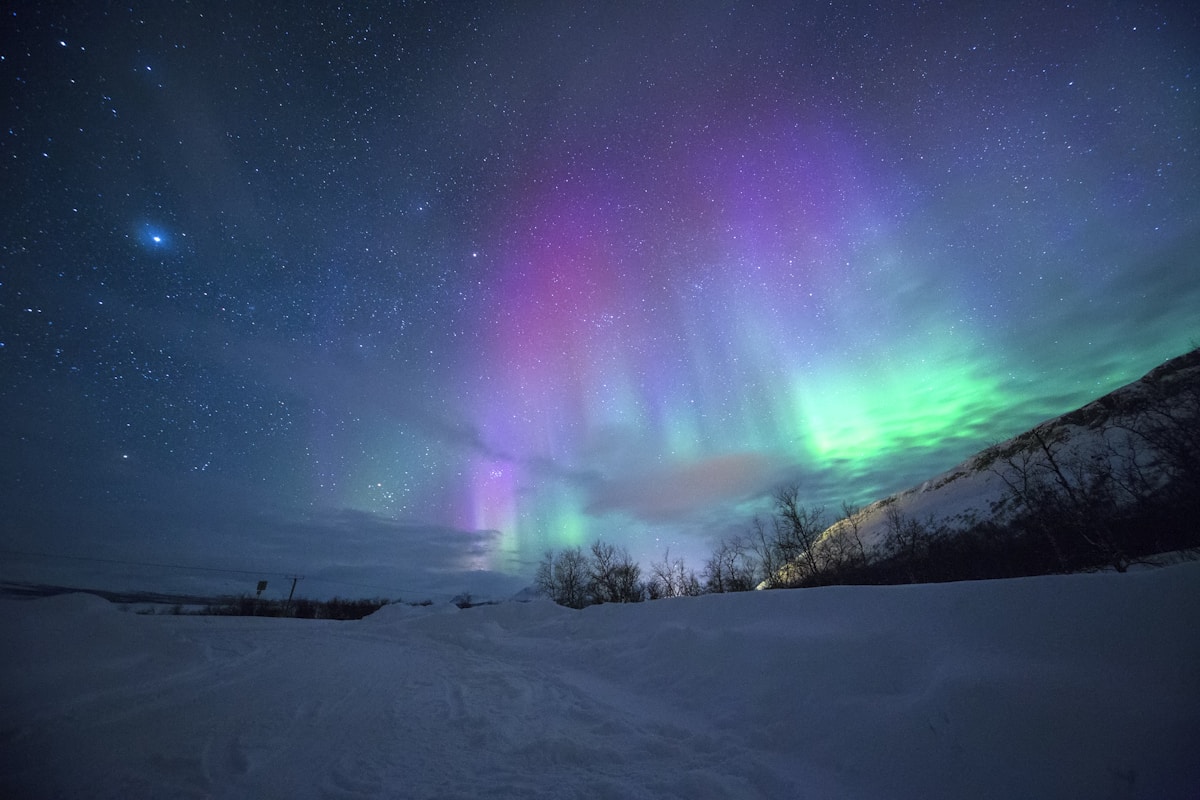
- Primary Signal: How to Read an Aurora Forecast: KP Index, Solar Wind, and Cloud Cover
- Overview: An aurora forecast combines the KP index, solar wind data, and local cloud cover. Learning to read all three stops wasted trips and puts you under the lights when they actually app...
- Verification: Analyzed and compiled by FreeSky Cosmos editorial monitoring desk.
The KP index is a global scale from 0 to 9 that measures disturbance in Earth's magnetic field, averaged from magnetometers around the world and updated every three hours. Higher values mean stronger geomagnetic activity and a greater chance that the auroral oval expands toward lower latitudes. As a rough guide, KP 3 can produce visible aurora in northern Scotland, Iceland, and northern Scandinavia, KP 5 brings displays to much of the northern United States and central Europe, and KP 7 or above can push aurora far south, though local conditions always decide what you actually see.
The common beginner mistake is treating KP as a guarantee. It is a planetary average, not a local prediction, and a KP 5 night can still be quiet over your location if the auroral oval sits elsewhere or if the magnetic disturbance peaks while your sky is cloudy. Conversely, a KP 3 night under a dark, clear sky can show a beautiful arc on the northern horizon that a forecast-only watcher would miss. Use KP as a first filter, then check the details that decide your specific sky.
The deeper driver of aurora is the solar wind, the stream of charged particles flowing from the Sun, and the measurements that matter most are its speed, density, and the direction of its magnetic field. When the interplanetary magnetic field points southward, a negative Bz value, it connects efficiently with Earth's magnetic field and funnels energy into the upper atmosphere, which is why experienced aurora watchers check Bz before leaving the house. A fast solar wind above 500 kilometres per second combined with a southward Bz is a strong sign, while a northward Bz can suppress displays even at moderate KP.
Coronal mass ejections, huge eruptions of solar plasma, are the events behind the strongest storms, and space-weather agencies issue watches when one is Earth-directed, usually giving one to three days of warning. Solar wind monitors at the L1 Lagrange point give about 30 to 60 minutes of real-time confirmation before the particles arrive, which is why live aurora apps and alerts are worth installing. A forecast that says a storm may arrive tonight plus live data showing it has actually arrived is the combination to act on.
Cloud cover cancels everything, so your local forecast deserves as much attention as the space weather. A clear-sky chart showing cloud, transparency, and darkness is more useful than a general weather app, and a thin high haze that barely registers in daylight can still dim a faint aurora. Choose a viewing site with a dark northern horizon, away from town lights, and arrive early enough for your eyes to adapt, because faint aurora is easily missed by eyes fresh from a lit car interior.
Set realistic expectations by latitude. From mid-latitudes, most displays appear as a low arc or faint rays on the northern horizon rather than overhead curtains, and a camera on a long exposure will reveal colours your eyes perceive only dimly, because human night vision is poor at colour. Photograph what you see even if it looks faint; the camera often surprises you. And when the forecast fails, remember that aurora hunting is a game of patience: the nights you miss teach you the forecast, and the night it works makes every cloudy trip worthwhile.
Finally, remember that aurora forecasting rewards persistence more than any single perfect forecast. Even experienced chasers in Iceland or northern Norway report that only a fraction of their outings produce a great display, and the difference between them and a disappointed tourist is usually the willingness to try again the next clear night. Keep your gear ready, your alerts switched on, and your expectations honest, and treat each outing as a night under the stars that might include aurora, rather than a pass-or-fail test. When the sky finally erupts in green curtains overhead, you will understand why people plan entire holidays around a forecast that is, at best, an educated guess about the Sun.
📖 Continue Reading the Full Story
Continue reading this article on FreeSky Cosmos.
⚡ Access Full Content NowMore from FreeSky Cosmos



 🛰️ FreeSky Aerial
Future Forecast: BMI Calculator — Body Mass Index & Healthy Weight (Day 20 Guide)
Next-generation developments in BMI Calculator — Body Mass Index & Healthy Weight on FreeSky Aerial. Discover ...
 ⚡ CyberTech 568
How to Speed Up a Slow Windows 11 Laptop Without Reinstalling
Fix a sluggish Windows 11 laptop with built-in tools: trim startup apps, clear junk, and switch power modes - ...
 ☁️ FreeSky Cloud
Case Study & Analysis: BMI Calculator — Body Mass Index & Healthy Weight (Day 19 Guide)
Real-world results and lessons from BMI Calculator — Body Mass Index & Healthy Weight on FreeSky Cloud. Discov...
 🗺️ FreeSky GeoData
Risk Management Playbook: BMI Calculator — Body Mass Index & Healthy Weight (Day 22 Guide)
Minimizing downside volatility with the BMI Calculator — Body Mass Index & Healthy Weight on FreeSky GeoData. ...