How Fast Does the ISS Travel? The Speed Behind the Space Station's Orbit
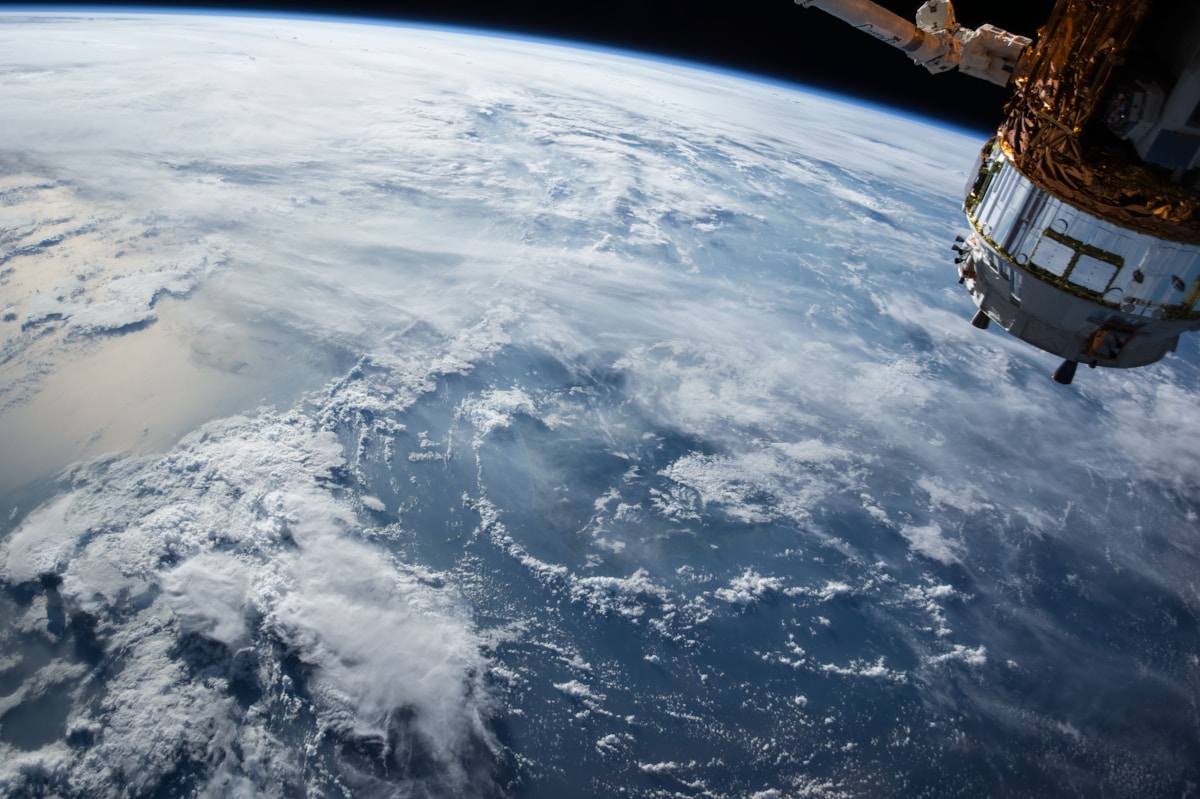
- Primary Signal: How Fast Does the ISS Travel? The Speed Behind the Space Station's Orbit
- Overview: The space station travels at about 28,000 kilometres per hour, circling Earth every 90 minutes. That speed is what keeps it in orbit instead of falling down....
- Verification: Analyzed and compiled by FreeSky Cosmos editorial monitoring desk.
The International Space Station crosses the sky in minutes, and if you have ever watched it pass overhead you may have wondered how something so large moves so fast. The answer is that its speed is not a luxury: it is the very thing keeping the station in orbit. Slow down significantly, and the station would fall back to Earth.
The station orbits at roughly 28,000 kilometres per hour, or about 7.7 kilometres every second. At that speed it circles the planet in about ninety minutes, which is why astronauts see roughly sixteen sunrises and sunsets per day. To put it in everyday terms, that is fast enough to travel from London to New York in well under half an hour, though of course the station travels in a circle high above Earth rather than between cities. Its altitude is around 400 kilometres, far above airliners but still within the outermost wisps of the atmosphere.
Orbit is best understood as falling with style. Gravity constantly pulls the station toward Earth, but its enormous sideways speed means that as it falls, Earth's surface curves away beneath it at the same rate. The result is a continuous free fall around the planet rather than a fall into it. This is why astronauts float: they and the station are falling together, so there is no floor pushing against their feet. It is the same principle behind every satellite, from weather spacecraft to the Moon itself.
Even at 400 kilometres, the atmosphere is not completely gone. Thin air creates a tiny drag that slowly lowers the station's orbit, so visiting cargo and crew vehicles periodically boost it back up. Without those reboosts, the station's orbit would decay over months to years until it re-entered the atmosphere. Planning those boosts is part of routine station operations, and it is one reason the station's altitude is a compromise: higher would mean less drag but harder, more expensive resupply trips.
You can see the station's speed with your own eyes. Use a pass predictor to find the next bright pass over your location, then watch a steady, bright, non-blinking point move across the sky faster than any aircraft. It will cross from horizon to horizon in a few minutes. That moving light is a football-field-sized laboratory travelling at nearly eight kilometres per second, carrying a crew that lives and works inside it. It is the fastest thing most of us will ever see with the naked eye.
The station's speed is tied to its altitude: lower orbits require faster speeds, higher orbits slower ones. A satellite in geostationary orbit, 36,000 kilometres up, travels at only about 3 kilometres per second, but it stays over the same spot on Earth because its orbital period matches Earth's rotation. The Moon, much farther away, moves at about 1 kilometre per second around Earth. The pattern is universal: the closer a satellite is to Earth, the faster it must travel to stay in orbit, which is why low-orbit satellites whip around the planet while distant ones amble.
That relationship also explains why launches aim for specific altitudes. A satellite's orbit is chosen for its job: low for detailed Earth imaging and fast revisits, medium for navigation constellations, high for communications coverage. Each altitude comes with its own speed, period, and radiation environment, and mission planners balance those against launch cost and the satellite's lifetime. The station's 28,000 kilometres per hour is simply the speed that goes with its 400-kilometre job.
📖 Continue Reading the Full Story
Continue reading this article on FreeSky Cosmos.
⚡ Access Full Content NowMore from FreeSky Cosmos

 🛍️ Caylin Shop
9 TikTok Shop Dorm Room Essentials Under $20 That Actually Earn Their Space (2026)
Dorm rooms are tiny and budgets are tinier. These nine TikTok Shop finds under $20 — from shower caddies to mi...
 ⚡ CyberTech 568
How to Speed Up a Slow Windows 11 Laptop Without Reinstalling
Fix a sluggish Windows 11 laptop with built-in tools: trim startup apps, clear junk, and switch power modes - ...
 🤖 WinBar AI
How Does the Kelly Criterion Work in Sports Betting?
The Kelly Criterion is the classic formula for sizing bets based on your edge. Here is how it works, why most ...
 🛰️ FreeSky Aerial
How to Carry Medications on International Flights: 2026 Rules
Flying with medication in 2026? This guide covers carry-on rules, the 100 ml exemption for liquid medicines, l...