Supermoon Explained: What It Is, Why It Looks Bigger, and When to Watch
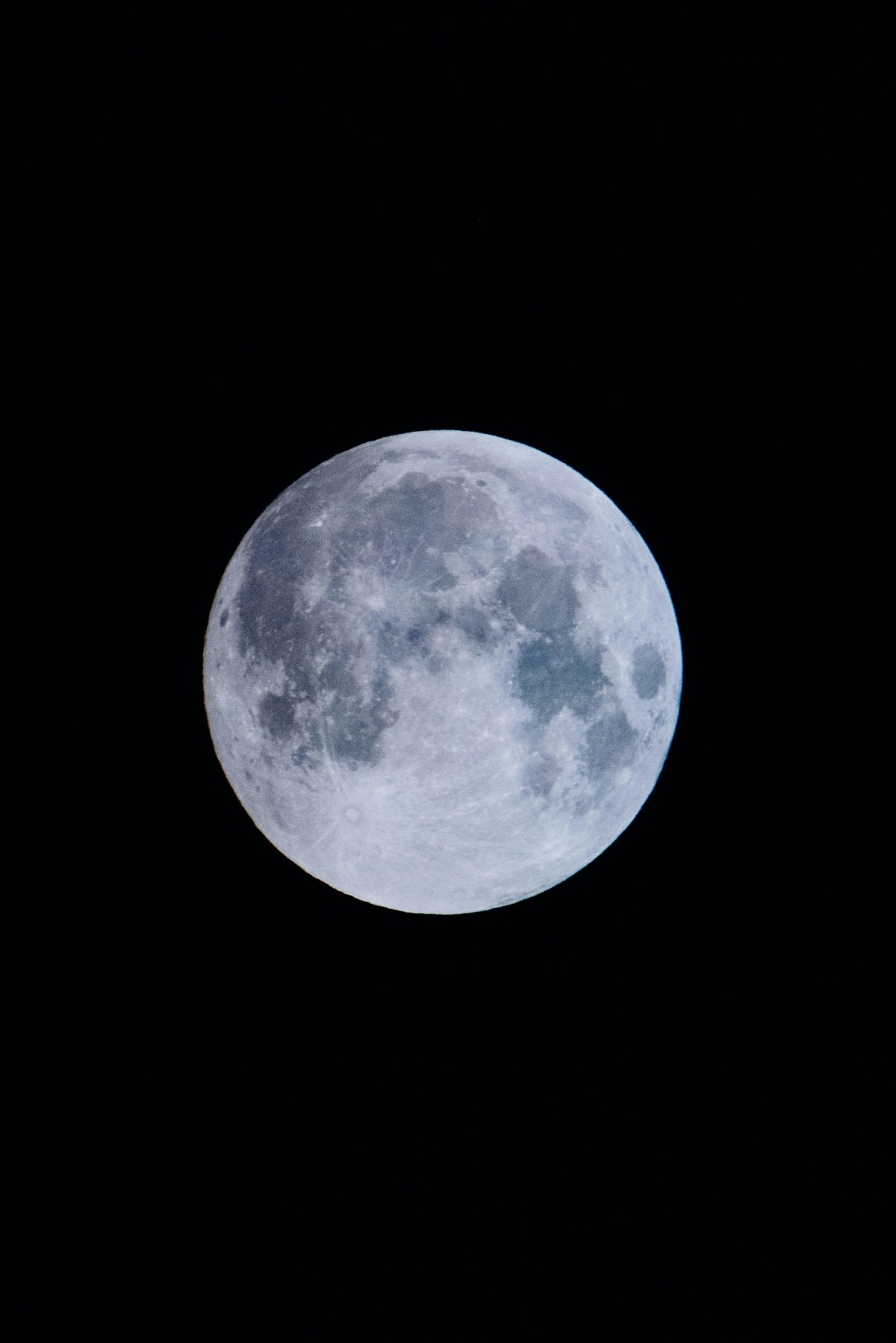
- Primary Signal: Supermoon Explained: What It Is, Why It Looks Bigger, and When to Watch
- Overview: A supermoon happens when a full Moon coincides with the Moon's closest approach to Earth. It looks larger and brighter, but the real spectacle is subtler than the headlines suggest...
- Verification: Analyzed and compiled by FreeSky Cosmos editorial monitoring desk.
The Moon does not circle Earth in a perfect circle; its orbit is an ellipse, so its distance varies between about 356,500 kilometres at perigee and 406,700 kilometres at apogee. When a full Moon falls near perigee, astronomers call it a perigee syzygy and the media calls it a supermoon. The result is a Moon up to 14 percent wider and 30 percent brighter than a full Moon at apogee, though compared with an average full Moon the difference is closer to 7 percent in size, which most eyes cannot reliably judge without a side-by-side comparison.
That honesty matters because supermoon headlines often promise a dramatically huge Moon that disappoints in person. The real visual magic is the Moon illusion: when the Moon hangs low near the horizon, beside trees or buildings, your brain perceives it as enormous regardless of its actual distance. A supermoon near moonrise therefore feels spectacular even when the measured size change is modest, and that combination of real brightness plus the illusion is why these nights draw crowds.
A perigee full Moon does strengthen tides slightly, producing what coastal scientists call perigean spring tides, which run a few centimetres higher than usual. This is measurable but rarely dramatic, and it does not trigger earthquakes or extreme weather, despite recurring social media claims. Studies have repeatedly found no reliable link between lunar perigee and seismic activity, and the Moon's gravitational effect on Earth is far too small and gradual to cause sudden events.
The same scepticism applies to claims about sleep and behaviour. Large reviews find, at most, tiny average shifts in sleep timing around full Moons, with no consistent effect worth planning your life around. Enjoying a supermoon needs no pseudoscience; the genuine facts, a closer Moon, a brighter night landscape, and the chance to photograph it, are interesting enough without invented drama.
The best views come at moonrise, when the Moon is low and the illusion is strongest, and at moonset the following morning. Find an eastern horizon with an unobstructed view and a foreground object, such as a hill, tower, or tree line, to give your brain scale. Check the exact moonrise time for your location rather than guessing, and arrive fifteen minutes early, because the most dramatic minutes pass quickly as the Moon climbs.
For photography, a telephoto lens makes the Moon look large against the landscape, while a phone alone will render it as a small bright disc. Expose for the Moon itself rather than the dark sky, or it will blow out to a white blob; most phones let you tap the Moon and drag the exposure down. Take a few frames early, when the Moon is orange from atmospheric scattering, and again later when it turns bright white. Compare your shots with a normal full Moon later in the year and you will see the genuine, modest difference for yourself.
It is worth marking the calendar for the next few perigee full Moons rather than treating any single supermoon as a once-in-a-lifetime event. Supermoons occur three or four times most years, and comparing them teaches you more than any single viewing: notice how the Moon's apparent size barely changes between a supermoon and an ordinary full Moon, while the horizon illusion varies dramatically with your viewpoint. Try watching moonrise from two different locations, one with a flat horizon and one with buildings or hills for scale, and the difference will convince you that perception, not distance, creates most of the drama. That understanding makes every full Moon a little more interesting, supermoon or not.
📖 Continue Reading the Full Story
Continue reading this article on FreeSky Cosmos.
⚡ Access Full Content NowMore from FreeSky Cosmos


 🛰️ FreeSky Aerial
How Do Pilots Land Planes in Thick Fog? Autoland Explained
When pilots can't see the runway, the autopilot takes over. Here's how ILS beams and autoland systems guide ai...
🛍️ Caylin Shop
9 TikTok Shop Dorm Room Essentials Under $20 That Actually Earn Their Space (2026)
Dorm rooms are tiny and budgets are tinier. These nine TikTok Shop finds under $20 — from shower caddies to mi...
 ⚡ CyberTech 568
Step-by-Step Tutorial: Days Between Dates Calculator — Count Days & Weeks (Day 2 Guide)
How to accurately use the Days Between Dates Calculator — Count Days & Weeks on CyberTech 568. Discover essent...
 🤖 WinBar AI
Decision-Making Framework: GST Calculator — Add or Extract GST & VAT (Day 28 Guide)
How data from our GST Calculator — Add or Extract GST & VAT on WinBar AI. Discover essential eliminates bias, ...