James Webb Telescope Discoveries Explained in Plain Language
- Primary Signal: James Webb Telescope Discoveries Explained in Plain Language
- Overview: Webb's headlines are full of jargon, but the story is simple: early galaxies formed faster than expected, exoplanet atmospheres can now be read molecule by molecule, and star birth...
- Verification: Analyzed and compiled by FreeSky Cosmos editorial monitoring desk.
The James Webb Space Telescope has been returning images and data since 2022, and the headlines can be hard to follow: exoplanet atmospheres, galaxies from the early universe, star forming clouds in unprecedented detail. Behind the jargon, Webb's discoveries tell a surprisingly clear story about how stars, planets, and galaxies actually form, and several of its biggest results have already changed what astronomers thought they knew. Here is what Webb has found so far, explained without the technical fog.
One of Webb's first surprises was finding fully formed galaxies far earlier in cosmic history than models predicted. Some of these galaxies appear just a few hundred million years after the Big Bang, yet they already contain billions of stars and show organised structure. Astronomers expected the early universe to contain only small, messy proto galaxies, so these mature looking objects forced a rethink of how quickly stars could form. The debate continues, but the lesson is clear: the early universe was busier and more productive than anyone assumed.
Webb sees these distant galaxies because their light has been stretched into infrared wavelengths by the expansion of the universe, and its infrared instruments are designed precisely for that. Its golden mirrors collect faint light that older telescopes simply could not detect, and its position far from Earth keeps its instruments cold enough to sense that faint glow. The result is a view back to within a few percent of the universe's total age, a frontier that was mostly blank before Webb launched.
Webb's second headline area is exoplanet atmospheres. When a planet passes in front of its star, a tiny fraction of starlight filters through the planet's atmosphere, and Webb can split that light into a spectrum that reveals which molecules are present. It has detected water vapour, carbon dioxide, methane, and sulphur dioxide on various exoplanets, building the first real chemical inventories of worlds beyond our solar system. None of these detections proves life, but they prove the technique works, and that matters enormously.
The most exciting targets are small rocky planets around cool red dwarf stars, where Webb is now searching for atmospheres at all. Early results are mixed, with some planets appearing airless and others still ambiguous, which is itself valuable information. Astronomers are learning which kinds of planets keep their atmospheres and which lose them to stellar radiation, and that knowledge will guide the search for habitable worlds for decades. Patience is essential: confirming an atmosphere on a small planet takes many repeated observations.
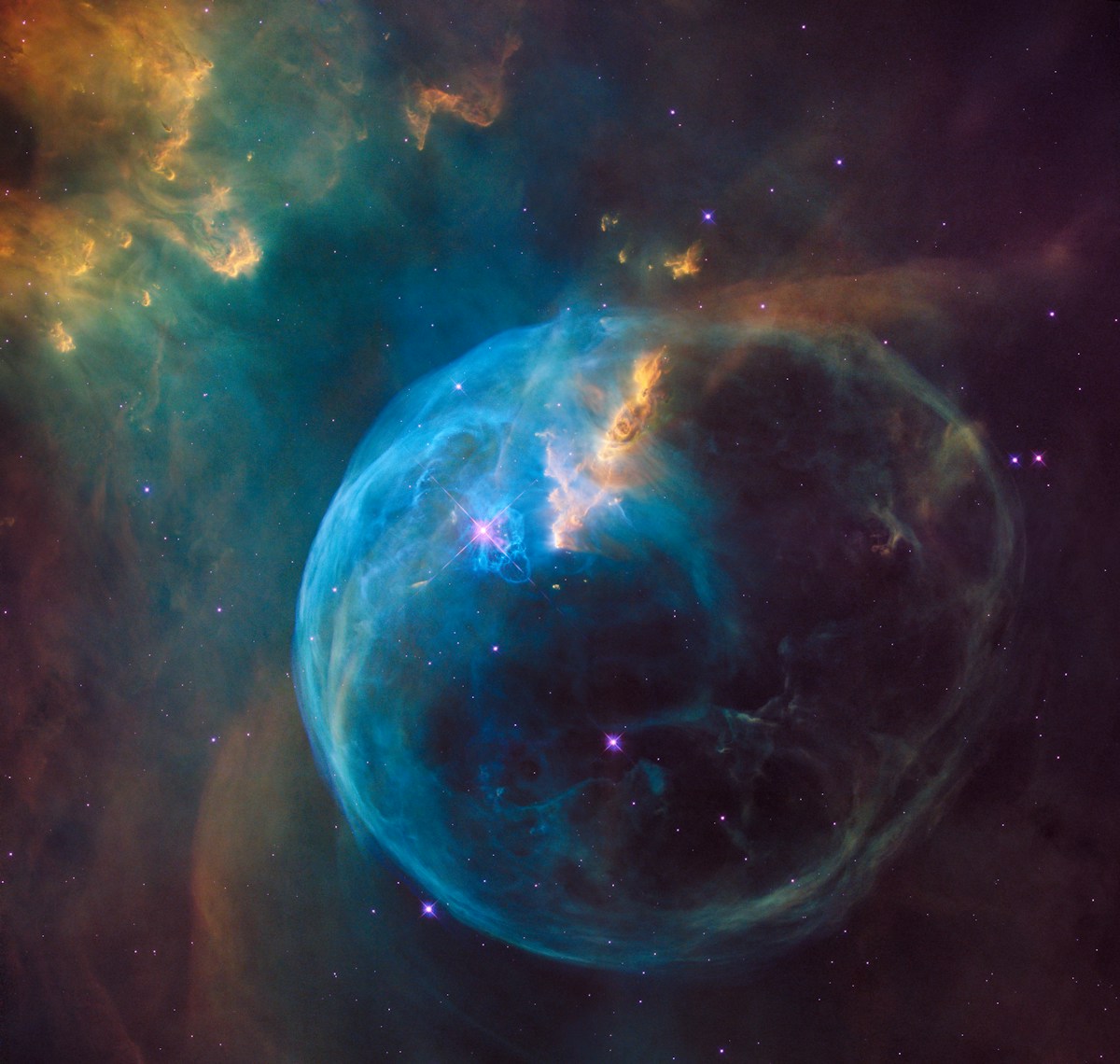
Webb's images of star forming regions, such as the Pillars of Creation and the Carina Nebula, are more than pretty pictures. Infrared light penetrates the dust clouds that hide newborn stars from visible light telescopes, revealing jets, discs, and young stars still gathering material. These images let astronomers count how many stars of each size form in a cloud, test theories of star formation, and watch the feedback process by which newborn stars blow away the gas around them and shut down further star birth.
Closer to home, Webb has studied objects in our own solar system too, from the rings of Neptune to the plumes of Saturn's moon Enceladus and the chemistry of asteroids. It has even spotted distant galaxies that act as gravitational lenses, bending light from objects behind them. The common thread is depth: Webb goes deeper, sharper, and further into the infrared than anything before it, and every observing cycle brings new surprises that no press release can fully capture.
If you want to follow Webb without drowning in papers, watch for three things: further early galaxy results as larger samples accumulate, atmosphere results for rocky planets around nearby red dwarfs, and deep surveys that map how galaxies grew over billions of years. Webb is expected to operate for well over a decade, so its greatest discoveries may still be ahead. The universe it is revealing is stranger, richer, and more active than the textbooks of just a few years ago suggested.
📖 Continue Reading the Full Story
Continue reading this article on FreeSky Cosmos.
⚡ Access Full Content NowMore from FreeSky Cosmos


 🛰️ FreeSky Aerial
How Do Pilots Land Planes in Thick Fog? Autoland Explained
When pilots can't see the runway, the autopilot takes over. Here's how ILS beams and autoland systems guide ai...
 ⚡ CyberTech 568
Internet Latency Test: How Fast Is Your Connection?
Test your internet latency free. Get accurate ping measurements and learn what your numbers mean for gaming an...
 💎 LuxeLiving 768
How to Calculate Crypto Staking Rewards (APY vs APR Explained)
Learn exactly how crypto staking rewards are calculated. APY vs APR explained with formulas and examples, plus...
 ⚽ SportsBet Insights Live
How Betting Odds Work (Explained So Simply Anyone Gets It)
Decimal, fractional, American — every odds format explained in plain English, plus how to convert odds into pr...