Mars Missions in 2026: Where the Red Planet Programmes Stand
- Primary Signal: Mars Missions in 2026: Where the Red Planet Programmes Stand
- Overview: Mars exploration is at a turning point, with rovers still working, sample return being rethought, and human missions on the horizon. This guide explains where each major Mars progr...
- Verification: Analyzed and compiled by FreeSky Cosmos editorial monitoring desk.
Mars is the most explored planet beyond Earth, and also the most debated. In 2026, the Mars programme is at a turning point: the rovers are still working, the plan to bring samples back to Earth is being rethought, and the first human missions are moving from concept to hardware. Understanding where each programme stands means understanding the difference between what is flying, what is planned, and what is still an argument.
The rovers: still working, still discovering
NASA's Perseverance rover continues to explore Jezero Crater, collecting rock samples and searching for signs of ancient microbial life in a place that was once a lake. Its companion, the Ingenuity helicopter, completed its mission after proving that powered flight is possible in the thin Martian atmosphere. Curiosity, the older rover in Gale Crater, continues to climb Mount Sharp and analyse the rocks it finds. Together, the rovers have built a detailed picture of a Mars that was once warm and wet, with rivers, lakes and conditions that could have supported life — and they are still adding to it every week.
Mars Sample Return: the programme being rethought
Mars Sample Return is the most ambitious planetary mission ever attempted: bring the samples Perseverance has collected back to Earth for study in laboratories. It is also the most troubled, with rising costs and a schedule that has slipped repeatedly. In 2026, NASA is reassessing the architecture, looking at simpler and cheaper ways to retrieve the samples, including new lander designs and commercial partnerships. The science case remains compelling — the samples are the best chance to answer whether Mars ever hosted life — but the engineering and the budget must be solved first. The samples are safe on Mars, waiting, while the plan is reworked.
The orbiters: the infrastructure of Mars exploration
Above the surface, a fleet of orbiters keeps the whole programme running. NASA's Mars Reconnaissance Orbiter and MAVEN, ESA's Mars Express and Trace Gas Orbiter, and newer arrivals from the UAE, China and India provide communications, weather data and high-resolution images. These spacecraft are the infrastructure of Mars exploration: they relay the rovers' data to Earth, scout landing sites for future missions, and study the atmosphere and climate. They are less glamorous than the rovers, but without them, nothing on the surface could work.
Human missions: from concept to hardware
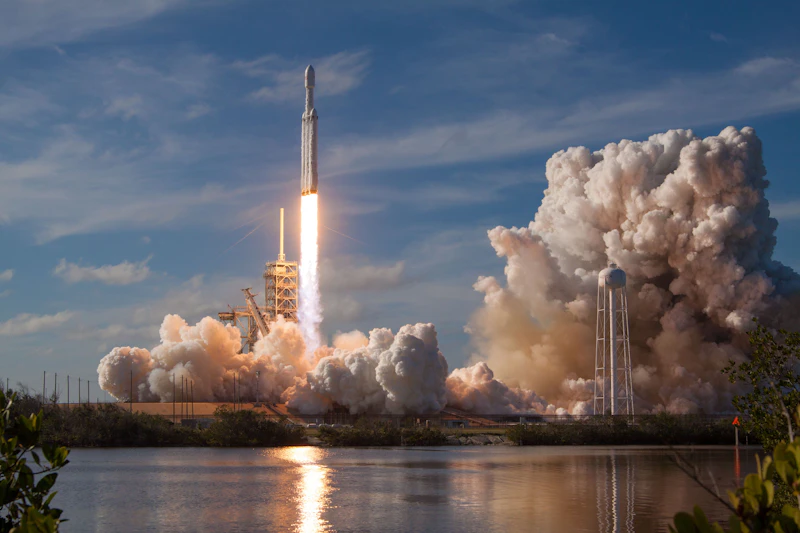
Human missions to Mars remain the long-term goal, and in 2026 they are moving from viewgraphs to hardware. SpaceX's Starship is being tested as the vehicle that could carry people to Mars, with flight tests working through the challenges of a fully reusable super-heavy rocket. NASA's Artemis programme, focused on the Moon, is the proving ground for the systems — life support, radiation protection, surface operations — that a Mars mission will need. No human mission has a firm date, and the challenges are enormous, but the direction is clear: the Moon first, then Mars, with the technology being built now.
Why Mars still matters
Mars matters for three reasons. It is the best place to answer whether life exists beyond Earth, because it was once habitable and may still hold evidence of it. It is the next destination for human exploration, and the lessons learned there will shape how we explore the rest of the Solar System. And it is a mirror: understanding how Mars lost its atmosphere and its water tells us about how planets change, including our own. The programme is slower and more expensive than anyone hoped, but the questions it answers are worth the wait — and the wait is getting shorter every year.
More from FreeSky Cosmos