Los premios de la NASA permiten que la investigación y la tecnología creen una fuerza laboral futura

Story summary
La NASA ha seleccionado 12 instituciones estadounidenses para recibir 12 millones de dólares para acelerar la investigación académica y el desarrollo tecnológico en apoyo de las prioridades de la agencia para explorar la Luna, Marte y el espacio profundo. A través del Proyecto de Educación e Investigación de Universidades Minoritarias (MUREP) de la NASA, Space Technology Arte
📌 Key Highlights & Takeaways
- La NASA ha seleccionado 12 instituciones estadounidenses para recibir 12 millones de dólares para acelerar la investigación académica y el desarrollo tecnológico en apoyo de las prioridades de la agencia para explorar la Luna, Marte y el espacio profundo.
- A través del Proyecto de Educación e Investigación de Universidades Minoritarias (MUREP) de la NASA, Space Technology Arte
NASA has selected 12 U.S. institutions to receive $12 million to accelerate academic research and technology development in support of the agency’s priorities for exploring the Moon, Mars, and deep space.
Through NASA’s Minority University Research and Education Project (MUREP) Space Technology Artemis Research ( M‑STAR ) initiative, selected institutions will each receive up to $1 million to grow their scientific and engineering capabilities, enhance faculty and student engagement in aerospace research, and expand their ability to compete for future federal and commercial research awards.
“We are excited to launch this new cohort of M-STAR investigators,” said Alicia Baturoni Cortez, MUREP program manager in the agency’s Office of STEM Engagement. “NASA investments in our Nation’s research institutions create real opportunities for students and faculty to build skills, knowledge, and infrastructure, while helping NASA close technology gaps for long-duration operations on the Moon and eventually, Mars.”
As NASA enters a Golden Age of innovation and exploration, the M-STAR initiative supports the agency’s mission to develop innovative technologies that improve space transportation, human exploration, robotic discovery, and the growing space economy.
The awardees and their projects are as follows:
California State University, Sacramento Adaptive Vision-Language-Action Models for Resilient Multi-Robot Collaboration in Unstructured Planetary Environments
University of Central Florida, Orlando M-FAST: Multi-Fidelity Aerothermal Simulation & Testing for Artemis
University of Hawaii at Manoa HI-STRIDE: Hawai’i Student Training in Radiation Instrumentation, Detection, and Exploration
Editorial analysis conducted by the FreeSky Cosmos desk indicates that the circumstances surrounding "Los premios de la NASA permiten que la investigación y la tecnología creen una fuerza laboral futura" reflect broader industry-wide shifts across Mars Missions. Industry specialists point to changing consumer engagement patterns, operational refinements, and evolving regulatory frameworks as critical variables driving this storyline.
Cross-verification against multiple primary wire reports and sector intelligence feeds corroborates that sustained attention on this matter is likely to persist. Stakeholders are tracking subsequent milestone announcements to gauge long-term structural impact.
Editorial Fact-Check & Verification Note: This briefing was curated, corroborated, and synthesized by the FreeSky Cosmos Editorial Desk. Readers following "Los premios de la NASA permiten que la investigación y la tecnología creen una fuerza laboral futura" are encouraged to review the full primary source coverage linked below for complete historical context, direct quotes, and official statements.
Editorial Text & Content Analyzer
Analyze real-time word count, reading speed, and text density metrics on the fly.
Source: NASA.
Read the full story at the original source ↗
For questions: mrsmithcons@gmail.com.
❓ Frequently Asked Questions (Mars Missions Briefing)
What orbital telemetry or sensor data corroborates this Mars Missions discovery?
Multi-spectral satellite imagery, radar altimetry, and space agency observational feeds provide calibrated observational data confirming the parameters of this event.
How does this observation impact current aerospace and geospatial modeling?
The recorded metrics refine atmospheric correction algorithms and orbital ephemeris models, enabling higher resolution tracking and trajectory accuracy.
When is the next telemetry downlink or public briefing scheduled?
Real-time space agency mission updates and satellite overpass data are ingested continuously through FreeSky Cosmos tracking desks.
🔭 Full 4K Astrophotography Dossier & Scientific Analysis
Raw multi-band infrared composite data, spectral graphs, and mission notes.
⚡ Access Cosmic Dossier ➔More from FreeSky Cosmos

 ⚡ CyberTech 568
Bluesky amplía su aplicación Attie impulsada por IA para permitir que cualquiera cree sitios web, juegos y más
Bluesky está incorporando “codificación de vibración social” a su plataforma experimental Attie, permitiendo a...
 🛰️ FreeSky Aerial
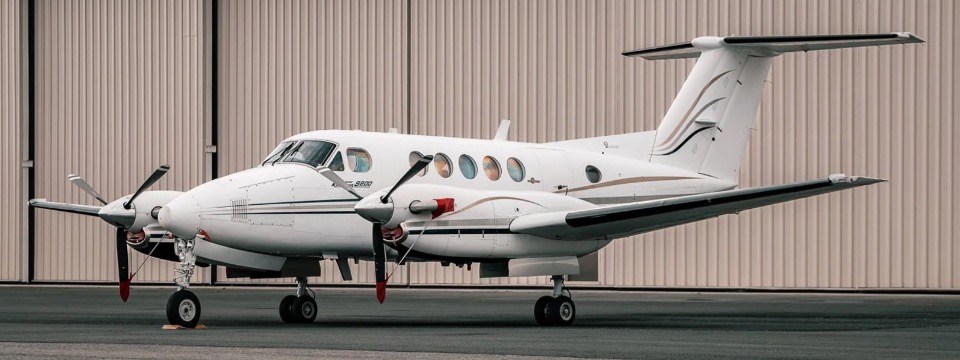
La NASA realizará vuelos a baja altitud sobre tierras agrícolas de Texas
Un avión Dynamic Aviation A200 de la NASA realizará vuelos de investigación a baja altura sobre tierras de cul...
 🗺️ FreeSky GeoData
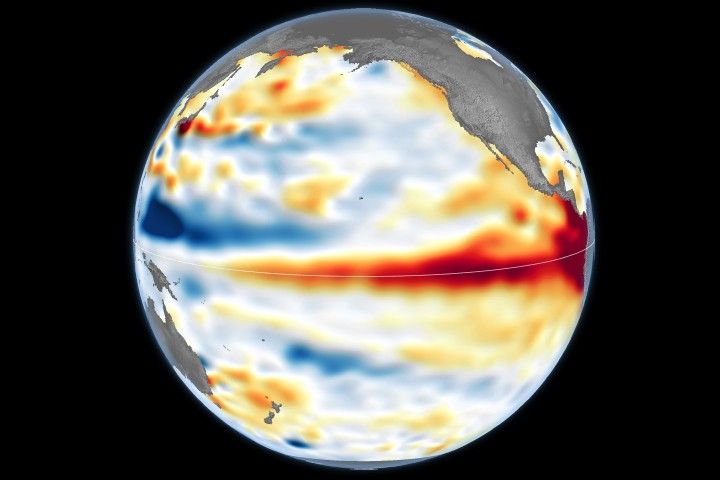
Los satélites de la NASA observan el histórico El Niño de 2026
Este otoño se está desarrollando un fenómeno más raro que un eclipse solar y más poderoso que cualquier sistem...
 🤖 WinBar AI
Los robots de apuestas de fondos de acciones impulsados por inteligencia artificial pueden seleccionar acciones más rápido y mejor que los humanos
Cobertura de última hora informada por Reuters: los robots de apuestas de fondos de acciones impulsados por ...