What Is a White Dwarf? The Quiet Fate of Stars Like Our Sun
- Primary Signal: What Is a White Dwarf? The Quiet Fate of Stars Like Our Sun
- Overview: Most stars, including our Sun, end their lives as white dwarfs: Earth-sized embers denser than anything on Earth. Here is how they form, why they matter, and what they tell us abou...
- Verification: Analyzed and compiled by FreeSky Cosmos editorial monitoring desk.
Every star you see in the night sky is burning through its fuel, and every one of them has an ending written into its mass. The biggest stars explode as supernovae and leave behind neutron stars or black holes. But most stars, including our own Sun, take a quieter path. They end their lives as white dwarfs: Earth-sized embers, denser than anything you can hold in your hand, slowly cooling for billions of years. A white dwarf is the quiet fate of most stars in the universe, and understanding it tells you the future of our own solar system.
What Is a White Dwarf?
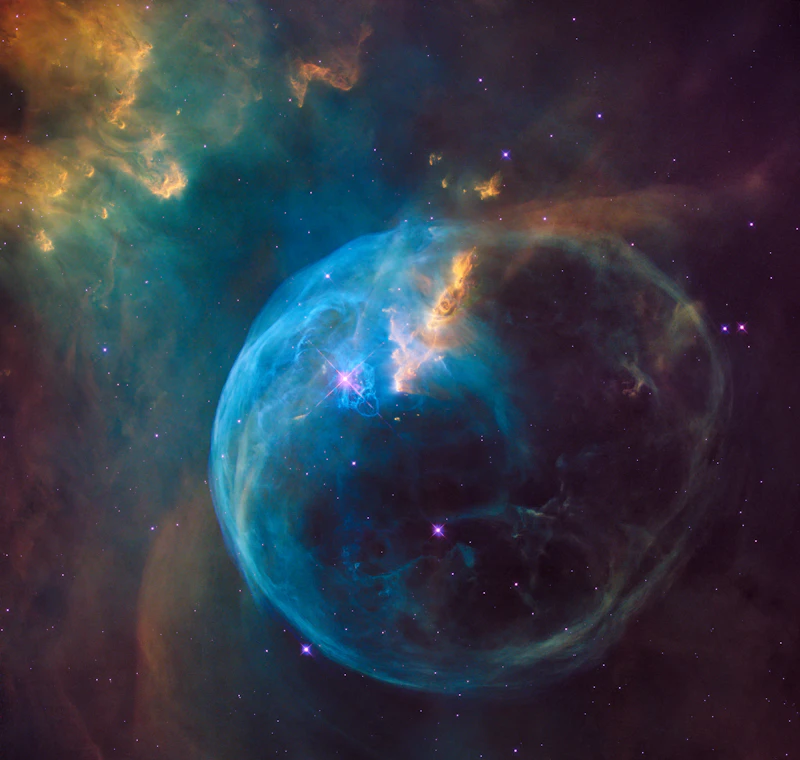
A white dwarf is the leftover core of a star that was once like the Sun, after it has shed its outer layers. When a star of less than about eight solar masses runs out of hydrogen in its core, it swells into a red giant, then gently blows its outer layers off into space, forming a beautiful shell called a planetary nebula. What remains is the hot, dense core, a ball of carbon and oxygen about the size of Earth but holding about half the mass of the Sun. A teaspoon of white dwarf material would weigh about five tonnes on Earth. It no longer burns fuel. It simply glows with stored heat, cooling so slowly that the oldest white dwarfs are still hot after ten billion years. The nearest and most famous white dwarf is Sirius B, the faint companion of the brightest star in the sky, discovered in 1862 and only about 8.6 light-years away.
How a Star Becomes a White Dwarf
The journey takes billions of years. A star like the Sun spends most of its life fusing hydrogen into helium in its core, and that fusion pressure holds the star up against its own gravity. When the hydrogen runs out, the core contracts and heats up, the outer layers expand and cool, and the star becomes a red giant, big enough to swallow Mercury and Venus. Then the star pulses, shedding its outer layers in a series of gentle winds that drift away to form a planetary nebula, a glowing shell of gas that can be seen for tens of thousands of years. The exposed core, hotter than 100,000 degrees at first, is the newborn white dwarf. It has no fusion left to support it, so it is held up by a strange quantum effect called electron degeneracy pressure, the refusal of electrons to be squeezed into the same space, which is what stops the star collapsing further.
The Chandrasekhar Limit
There is a hard limit to how massive a white dwarf can be: about 1.4 times the mass of the Sun, known as the Chandrasekhar limit after the Indian astrophysicist Subrahmanyan Chandrasekhar, who calculated it in 1930 and won the Nobel Prize for it in 1983. Below that limit, electron degeneracy pressure can hold the star up forever. Above it, the pressure fails, the star collapses, and you get a neutron star or a black hole instead. This limit is why white dwarfs matter so much to astronomers: when a white dwarf in a binary system steals gas from its companion and crosses the limit, it explodes as a Type Ia supernova, one of the brightest and most standard explosions in the universe. These supernovae are so consistent in brightness that astronomers use them as standard candles to measure the expansion of the universe, and it was Type Ia supernovae that revealed the accelerating expansion of the cosmos in 1998.
What Happens to a White Dwarf Over Time?
A white dwarf cools, very slowly. With no fusion to replace the heat it radiates away, it fades from white-hot to yellow to red over billions of years, eventually becoming a cold black dwarf, a lump of crystallised carbon and oxygen drifting dark through space. The catch is that the universe is only about 13.8 billion years old, and the cooling takes longer than that, so no black dwarf exists yet. Every white dwarf we can see is still glowing. Some of the oldest white dwarfs in our galaxy are more than ten billion years old and still shine faintly. In a sense, white dwarfs are the longest-lived visible objects in the universe: they will outshine every other star, fading so slowly that they will still be warm long after the last red dwarf has burned out.
What This Means for Our Sun
In about five billion years, our Sun will follow exactly this path. It will swell into a red giant, shed its outer layers, and leave behind a white dwarf about the size of Earth, slowly cooling in the dark. The planets will be gone or transformed long before that, but the white dwarf itself will endure for trillions of years, a quiet ember marking where a star once burned. When you look at Sirius B or any other white dwarf, you are looking at the future of our own star, and at the most common ending in the universe. Most stars do not die in explosions. They die quietly, cooling slowly, and they leave behind something small, dense and strangely beautiful.
More from FreeSky Cosmos