How to See the ISS Tonight: Find the Next Pass Over Your Town
- Primary Signal: How to See the ISS Tonight: Find the Next Pass Over Your Town
- Overview: The International Space Station crosses your sky several times a week and outshines every star. Here is how to find the next pass over your town and tell it apart from Starlink and...
- Verification: Analyzed and compiled by FreeSky Cosmos editorial monitoring desk.
It looks like a bright star gliding silently across the sky, too steady to be a plane and too fast to be a star. The International Space Station is the brightest human-made object in the night sky, and on a good pass it outshines every star and planet except the Moon and Venus. It crosses your sky several times a week, and you can predict exactly when, if you know where to look. This guide explains how to find the next pass over your town and how to make sure you do not miss it.
What Is the ISS and Why Is It So Bright?
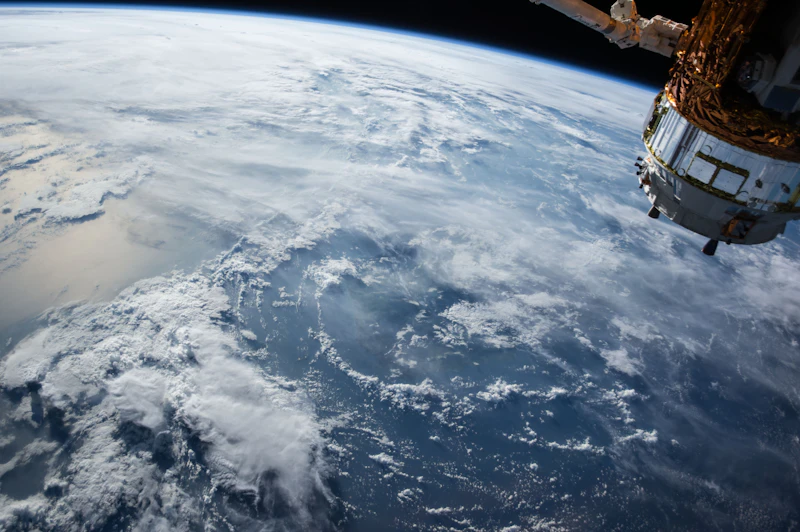
The International Space Station is a football-field-sized laboratory orbiting Earth at about 400 kilometres up, travelling at roughly 28,000 kilometres per hour and circling the planet every 90 minutes. It is bright because it is big and because its solar panels reflect sunlight down to the ground, just as the Moon does. When the station passes overhead shortly after sunset or shortly before sunrise, the Sun is below your horizon but still shining on the station, so it appears as a brilliant white point moving steadily across the sky. A good pass reaches magnitude -3 or brighter, which makes it brighter than Jupiter and obvious even from a city. The station is not always visible: it only shows up when it is in sunlight while you are in darkness, which is why most passes happen in the first couple of hours after sunset or the last couple of hours before sunrise.
How to Find the Next Pass Over Your Town
The easiest way is a free app. Stellarium, Sky Tonight and the dedicated ISS Detector app all show the next visible passes for your exact location, with the time, the direction to look and the maximum height of the pass. NASA's Spot the Station website does the same thing in a browser: enter your town and it lists the upcoming passes for the next few days, with the time the station appears, the time it disappears and the compass direction for each. A good pass is one that lasts at least three minutes and climbs high in the sky, above 40 degrees: low passes hug the horizon and are easy to miss behind rooftops and trees. Set an alarm for five minutes before the pass, because the station appears suddenly and crosses the whole sky in about six minutes at most.
What a Pass Looks Like
Go outside a few minutes early and look in the direction the app tells you. The station will appear as a bright point of light rising above the horizon, moving in a smooth straight line at a steady speed, roughly the speed of a high plane but without any blinking lights and without any sound. It does not twinkle, because it is close enough that its light is not scrambled by the atmosphere the way starlight is. It will cross the sky in three to six minutes, sometimes passing directly overhead, sometimes arcing across one side of the sky, and then it will fade suddenly as it slips into Earth's shadow. If it passes near the Moon or a bright planet, the sight is even better: a human outpost gliding past another world. Wave if you like: there are usually six or seven people aboard, and they can see your town from up there.
ISS vs Starlink: How to Tell Them Apart
The other common moving lights in the sky are Starlink satellites, and they are easy to confuse with the ISS at first glance. The difference is brightness and behaviour. The ISS is a single, very bright object, usually the brightest thing in the sky, moving alone. Starlink satellites travel in a line, a train of fainter points following each other along the same path, and they are much dimmer than the station, often only visible from a dark sky shortly after launch when they are still close together. An airplane is different again: it blinks, it changes direction, and you can often hear it. The ISS never blinks, never turns and never makes a sound. If you see a steady, silent, very bright light crossing the sky, that is the station, and it is carrying people.
Photographing the ISS
A phone on a tripod can capture the station as a long streak across the sky. Use night mode or a long exposure of 10 to 30 seconds, aim at the part of the sky the station will cross, and let it draw a line through your frame. A camera with a wide-angle lens and a 15-second exposure will catch the streak and the stars together, and the result looks far more impressive than the single point your eyes see. If you want to photograph the station itself rather than its trail, you will need a telescope and a lot of practice: it crosses the sky at about one degree per second, so tracking it by hand is a skill in itself. For most people, the streak photo is the one to aim for, and it is a lovely souvenir of the night you watched a space station fly over your town.
More from FreeSky Cosmos