Artemis II: Meet the Crew Flying Around the Moon and What They Will Do

- Primary Signal: Artemis II: Meet the Crew Flying Around the Moon and What They Will Do
- Overview: Artemis II will send four astronauts around the Moon, the first crewed lunar mission in more than 50 years. Meet the crew, learn the 10-day flight plan, and understand why this mis...
- Verification: Analyzed and compiled by FreeSky Cosmos editorial monitoring desk.
No human has travelled beyond low Earth orbit since Apollo 17 returned in 1972. Artemis II will change that. The mission will send four astronauts on a roughly 10-day flight around the Moon and back, testing the Orion spacecraft and the Space Launch System rocket with crew aboard for the first time. It is a test flight, not a landing, but it is also a historic moment: the crew will travel further from Earth than anyone has ever gone, and they will see the far side of the Moon with their own eyes. This article introduces the crew, explains the flight plan, and describes why this mission matters for the return to the Moon.
Artemis II's crew of four was announced in April 2023, and each member brings a distinct story. Commander Reid Wiseman, a former fighter pilot and International Space Station veteran, leads the mission. Pilot Victor Glover, who flew on SpaceX's Crew-1 mission, will be the first person of colour to travel to the Moon. Mission Specialist Christina Koch, who holds the record for the longest single spaceflight by a woman at 328 days, brings deep experience in space station operations. Mission Specialist Jeremy Hansen of the Canadian Space Agency will be the first non-American to travel beyond low Earth orbit, a reflection of Canada's contribution of the Canadarm3 robotic arm to the lunar Gateway station. Together they have trained for years, including in the Orion simulator and in survival training for a splashdown far from land.
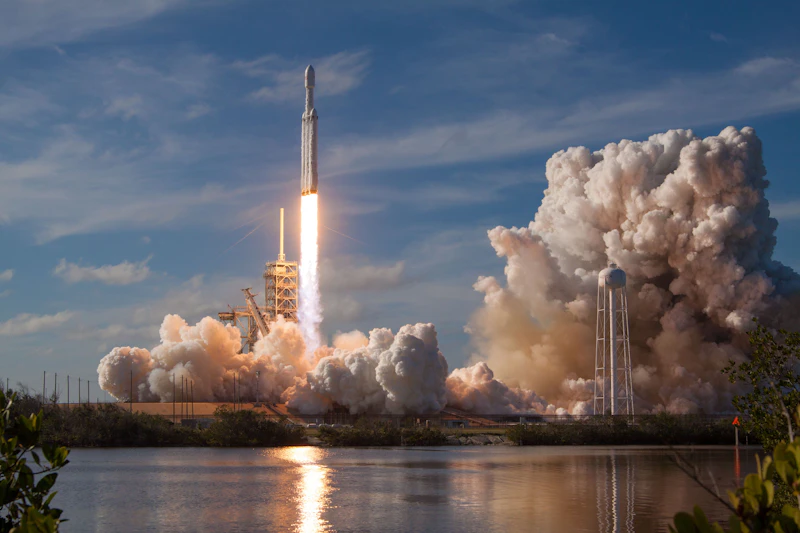
Artemis II begins with a launch on the Space Launch System from Kennedy Space Center in Florida, the most powerful rocket NASA has ever flown. After reaching Earth orbit, the crew will spend about a day checking Orion's systems, including a high-altitude pass that takes them further from Earth than any crewed mission has gone since Apollo. They will then fire Orion's engine for a lunar flyby, swinging around the far side of the Moon at a distance of about 10,000 kilometres beyond it. The free-return trajectory means that if the engine fails, gravity will bring them home anyway, a safety feature inherited from Apollo. The return includes a high-speed re-entry at around 40,000 kilometres per hour, testing Orion's heat shield at lunar return speeds, before a splashdown in the Pacific Ocean off California.
Artemis II is a test flight, and its objectives are practical. The crew will test Orion's life support, navigation, and communication systems with humans aboard, including the new displays and controls. They will test the heat shield during the high-speed re-entry, which is the most dangerous part of the flight. They will also test the spacecraft's ability to operate far from Earth, where a radio signal takes more than a second to travel each way, and where the crew must be able to handle emergencies without immediate help from mission control. The mission will also validate the ground systems, the recovery fleet, and the procedures for bringing a crew home from the Moon. Every system that works on Artemis II is one less risk for the landing mission that follows.
Artemis II matters for three reasons. First, it returns humans to deep space after more than half a century, proving that the Orion spacecraft and the Space Launch System work with crew. Second, it builds the operational experience NASA needs for a Moon landing: the navigation, the communications, and the teamwork of flying far from Earth. Third, it is a statement of intent. The Artemis programme aims to establish a sustained presence on the Moon, with the Gateway station in lunar orbit and regular landings, and Artemis II is the first crewed step. The mission has slipped from its original date as the spacecraft and rocket were prepared, but the crew's training continues, and when the rocket finally lifts off, it will carry the hopes of everyone who has waited 50 years to see humans head for the Moon again.
When will Artemis II launch? The mission has slipped from its original schedule and the launch date depends on final spacecraft and rocket preparation; check NASA announcements for the latest date. Who is on the crew? Reid Wiseman, Victor Glover, Christina Koch, and Jeremy Hansen. Will Artemis II land on the Moon? No, it is a flyby mission around the Moon. The landing is planned for Artemis III. How far will the crew travel from Earth? Further than any humans have ever gone, beyond the Moon's far side. How long is the mission? About 10 days, from launch to splashdown in the Pacific.
More from FreeSky Cosmos